0%

Patio Furniture turns an outdoor area into a place to eat, rest, and gather. It includes chairs, tables, loungers, benches, and modular seating designed for outdoor conditions. The best choice is not always the most expensive or stylish one. It should fit your space, weather, routines, and willingness to maintain it.

Design reformer William Morris offered a useful principle: “Have nothing in your houses that you do not know to be useful, or believe to be beautiful.” That idea applies well outdoors. A compact balcony may need two folding chairs and a narrow table, while a shaded family patio could suit a deep-seated sofa and a sturdy dining set. Measure first. A chair that looks generous in a showroom can block a garden path at home.

Materials change the experience. Aluminum is light and generally easy to move; teak has a warm grain but needs care to retain its appearance. Woven resin can handle exposure better than many natural fibers, though construction quality still matters. Cushions should dry readily, and frames need to feel stable on the actual surface. Small details count.

There is no universal winner. Climate, storage, comfort, and budget all shape the decision. Even careful advice can miss how a set feels after an hour in the sun. Compare dimensions and care instructions, then test the seating when possible. Looks matter. So does comfort.
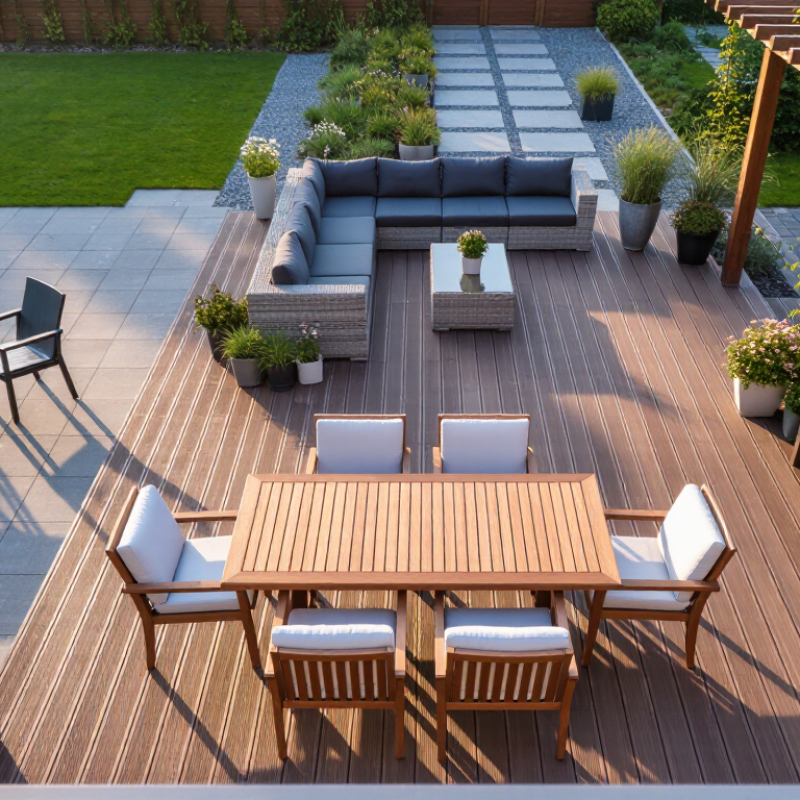
What Is Patio Furniture and Which Type Is Best?

What Patio Furniture Is and Where It Is Used

Patio furniture is movable, weather-conscious seating and tableware designed for outdoor use. Typical pieces include dining sets, lounge chairs, benches, and side tables. Materials such as powder-coated metal, treated wood, and resin are chosen to handle sun, damp air, and frequent use. “Outdoor” does not mean maintenance-free. Cushions may need to come indoors before heavy rain, and even durable finishes can fade. Grand View Research estimated the global outdoor furniture market at about $50.4 billion in 2023, reflecting the broad demand for furnishings suited to open-air living.

These furnishings work on patios, balconies, decks, porches, and beside pools or garden paths. A small balcony may need only two folding chairs and a narrow table; a larger patio can support dining, conversation, and lounging zones. Keep walkways clear, and place chairs where people can face one another without blocking doors. Small details matter. A chair can wobble. NAHB’s 2024 What Home Buyers Really Want survey found that 86% of buyers considered a patio essential or desirable. That finding speaks to the appeal of outdoor space, though it does not mean every home needs a full furniture set. Choose pieces for the space, local weather, and how people actually use it.

What Is Patio Furniture and Which Type Is Best?

Patio furniture is outdoor seating and dining furniture designed for spaces such as patios, decks, and gardens. The best type depends on how you use the space.

How to read this chart: Seating capacity is a typical guide per furniture piece, not a fixed specification. A lounge chair or chaise suits individual relaxation, while a loveseat or sofa can seat more people. Actual capacity varies by size and design.

Common Patio Furniture Types and Their Features

Patio furniture includes chairs, tables, loungers, and benches designed for outdoor use. The materials shape comfort, weight, upkeep, and lifespan. Grand View Research estimated the global outdoor furniture market at about $50.7 billion in 2023, reflecting broad demand for outdoor living products. That figure does not tell you which material suits your patio, though.

Aluminum frames are light and easy to move, while powder-coated finishes help protect them from corrosion. Steel feels sturdier, but scratches can expose it to rust. Teak and other dense hardwoods bring warmth and weight; they need periodic cleaning, and some owners prefer oiling to maintain their color. Resin wicker gives a woven look without the upkeep of natural wicker, but sun exposure may eventually weaken it. Plastic furniture is easy to rinse and often budget-friendly. It can feel less stable in wind.

Cushioned chairs add comfort, especially during long meals, but cushions need storage or quick-drying covers. Sling seats breathe well and shed water faster. A practical mistake is treating “weather-resistant” as “weatherproof.” It is not. Measure the space with chairs pulled out, not tucked under the table. I would also check frame joints and fabric seams; small details are easy to overlook, and they affect everyday use.

Materials, Construction, and Weather Resistance

What Is Patio Furniture and Which Type Is Best?
Materials, Construction, and Weather Resistance

Patio furniture is outdoor seating and dining furniture built to handle sun, moisture, and temperature changes. Material matters, but construction often decides how long a set lasts. The USDA Forest Products Laboratory’s Wood Handbook reports average shrinkage of about 6% across the grain and 12% around the growth rings as wood dries from green to oven-dry. Repeated wet and dry cycles can loosen rigid joints. Look for drainage gaps, sealed end grain, and replaceable hardware.

Aluminum frames are light and resist rust, though damaged coatings can expose the surface to corrosion. Teak and other durable hardwoods weather naturally, but they still need cleaning and sound joinery. Synthetic wicker should have UV-resistant strands and a sturdy frame; low-quality weaving may crack or sag. For cushions, quick-drying foam and removable covers help after rain. ASTM G154 describes a laboratory test using ultraviolet light and moisture exposure. It helps compare materials, but it cannot promise a precise number of outdoor years.

Tips: Check welds, fasteners, and frame joints before buying. Set furniture on level ground, and let cushions dry fully after showers. Near the coast, rinse salt from metal parts regularly. There is no perfect material; shade, upkeep, and local weather change the answer.

What Is Patio Furniture and Which Type Is Best? — Materials, Construction, and Weather Resistance

Material or Type Typical Construction Weather Resistance Advantages Limitations and Care Best Suited For
Teak Solid hardwood boards or slats joined with outdoor-rated hardware. High resistance to moisture and decay when properly made; its natural oils help protect the wood. Sun exposure gradually changes its color to silver-gray. Sturdy, naturally weather-resistant, and suitable for long-term outdoor use. Usually heavier and more expensive than many alternatives. Clean periodically; oiling is optional and does not prevent natural weathering. Buyers seeking a durable natural-wood look for uncovered patios or gardens.
Powder-coated aluminum Hollow or solid aluminum frames with a baked-on protective coating; often paired with fabric or mesh seats. Very good corrosion resistance because aluminum does not rust like iron. The coating can chip or scratch, exposing the surface to wear. Lightweight, easy to move, and generally low-maintenance. Can feel less substantial in strong wind; secure or store lightweight pieces when storms are expected. Clean coating damage promptly. Balconies, coastal areas, and spaces where furniture is moved often.
Stainless steel Welded or mechanically joined metal tubing or formed components. Good corrosion resistance, but performance varies by steel grade and exposure. Salt and standing moisture can still cause staining or corrosion. Strong, stable, and suited to slim, modern designs. Heavier than aluminum and may become hot in direct sun. Rinse away salt and clean regularly, especially near the coast. Contemporary outdoor dining areas needing a sturdy metal frame.
Steel Tubular or solid steel frames, usually protected with paint or powder coating. Moderate to good when the finish is intact; scratches and chips can allow rust to develop, particularly in wet climates. Strong and often less costly than stainless steel. Can be heavy. Inspect the finish and touch up damaged areas; keep joints and surfaces clean and dry when possible. Stable seating and dining sets in covered or routinely maintained spaces.
HDPE (high-density polyethylene) Molded or extruded plastic lumber assembled into solid, slatted furniture. High resistance to moisture, rot, and insects. Quality and colorfastness vary; prolonged intense sun can affect some products. Does not need painting or sealing and is easy to wash. Can be heavy and may retain heat in direct sunlight. Check that fasteners and joints are designed for outdoor use. Low-maintenance patios, poolside areas, and households wanting wood-like forms without wood upkeep.
Synthetic resin wicker Weather-resistant plastic strands woven around an aluminum or steel frame. Good when the weave is UV-stabilized and the frame resists corrosion. Inexpensive or unprotected strands may fade, crack, or become brittle. Offers a woven appearance and often has a comfortable, flexible feel. Brush debris from the weave and wash gently. Use fitted cushions outdoors only if their fabric is made for outdoor exposure. Covered porches and patios where a woven style is desired.
Wrought iron Heavy, shaped metal components joined by welding or mechanical fasteners, with a protective finish. Can perform well if its coating is maintained; exposed or chipped areas may rust, especially in humid or coastal conditions. Very stable in windy settings and often highly durable when cared for. Heavy to move and can heat up in direct sun. Inspect for rust and maintain the protective finish. Windy gardens and patios where weight and a traditional metal style are priorities.
Outdoor fabrics and cushions Woven or solution-dyed fabric covers over foam or quick-drying fill, used with a separate furniture frame. Varies by fabric, treatment, seams, and filling. Outdoor-rated materials resist fading and moisture better, but are not necessarily waterproof. Adds comfort and color; removable covers can simplify cleaning. Follow care instructions, allow cushions to dry fully, and store them during prolonged rain or winter weather. Any seating where comfort matters, especially under a canopy or in a covered area.

Choosing the best type: Match the frame and finish to your local climate, exposure, maintenance preferences, and need to move or store the furniture. Weather resistance depends on the quality of construction, hardware, coatings, and care—not material alone.

How to Choose Patio Furniture for Your Space and Climate

Choosing patio furniture starts with the space and its weather, not a style trend. Measure the usable area, including the path from the door and room to pull out chairs. Measure twice. NOAA’s 1991–2020 U.S. Climate Normals provide 30-year averages for local temperature and precipitation; check these before choosing materials. Frequent rain calls for quick-drying cushions and rust-resistant frames. Strong sun can fade fabric and heat dark surfaces, so add shade and look for removable, UV-resistant covers. The U.S. Environmental Protection Agency’s UV Index guidance recommends sun-protection measures at index 3 or higher. Shade matters.

For humid or rainy climates, aluminum frames and synthetic woven materials are often practical because they dry quickly and need little upkeep. In dry, sunny areas, hardwood can offer a sturdy, natural look, but it needs regular care. Coastal air can corrode some metals; check whether the frame is designed for salty conditions. A compact balcony may suit a foldable bistro set, while a larger patio can fit a dining table and lounge chairs. Leave enough space to move comfortably. Cushions feel inviting, but they are a chore if you must bring them inside after every shower. I would choose fewer durable pieces over a crowded set, though that trade-off can feel less cozy at first.

Which Patio Furniture Type Best Fits Different Needs

The best patio furniture depends on how you use the space, how much care you can manage, and what your weather is like. Grand View Research estimated the global outdoor furniture market at US$50.21 billion in 2023, reflecting broad demand rather than proof that one material suits everyone. Start with a real need: quiet reading, family meals, or extra seats for guests.

For frequent dining, choose a sturdy table with chairs that slide easily beneath it. Aluminum is light and resists rust, while powder-coated steel feels more substantial but may need prompt care if its finish chips. Resin wicker offers a softer look and usually needs little upkeep; check that its frame feels stable. Teak brings natural warmth, but it weathers and may need periodic maintenance. On a small balcony, folding chairs or a compact bistro set can preserve walking space. Measure first. Leave room to pull chairs out, not just fit them in.

Tips: Match the furniture to your hardest seasonal condition. Windy yard? Favor heavier pieces or secure lightweight ones. In strong sun, add shade and choose cushions with removable, weather-resistant covers. Test seat depth if possible; a beautiful chair can still feel awkward after twenty minutes. I would not buy a full matching set before checking how the first few pieces work in your space.

FAQS

How should I measure my patio before buying furniture?

Measure the usable area, door path, and space for pulled-out chairs. Measure twice.

Which materials work well in rainy or humid climates?

Aluminum and synthetic woven materials dry quickly and need little upkeep. Cushions still need attention.

Is weather-resistant furniture completely weatherproof?

No. Weather-resistant does not mean weatherproof. Rain, sun, and neglect can still cause wear.

What furniture suits a small balcony?

A foldable bistro set can save space. Check that chairs do not block the doorway.

How can I make patio furniture more comfortable?

Cushioned chairs feel inviting during long meals. Quick-drying covers help, but storing cushions can become a chore.

What should I consider when choosing furniture for strong sun?

Add shade and choose removable, UV-resistant covers. Dark surfaces can also become hot.

How do different frame materials compare?

Aluminum is light and easy to move. Steel feels sturdy, but scratches may expose it to rust.

What details are easy to overlook?

Check frame joints and fabric seams. I might miss them in a showroom, but they affect daily use.

Conclusion

Patio Furniture includes the chairs, tables, loungers, and other furnishings used to make outdoor areas comfortable and practical. It can suit a small balcony, a garden, a deck, or a spacious patio. Common options range from dining sets and conversation seating to compact folding pieces and reclining loungers, each designed for different activities and amounts of space.

Choosing the right type means considering how the area will be used, how much room is available, and what weather the furniture must withstand. Materials such as wood, metal, plastic, and woven fibers differ in durability, maintenance, comfort, and resistance to sun, rain, and temperature changes. The best choice is the one that balances these qualities with your climate, budget, and preferred style—whether you need easy-care seating for everyday use, a dining area for outdoor meals, or a relaxing place to lounge.

Evelyn

Evelyn

Evelyn is a professional marketing specialist with a strong understanding of the company’s products, services, and customer needs. She regularly contributes expert articles to the company website, sharing clear, practical insights that help readers understand product features, compare options, and......