Outdoor Furniture does more than fill an empty patio. It shapes how people eat, rest, and gather outdoors. The best choice depends on space, weather, and daily habits—not just appearance. A small balcony may suit two folding chairs and a compact café table. A broad deck can handle a sectional, dining set, or shaded lounge area. Think about the ground beneath each piece, too. Chair legs can wobble on uneven stone, while cushions left in summer rain may take hours to dry.
Furniture designer Charles Eames once said, “The details are not the details. They make the design.” That idea matters outdoors. A smooth armrest, a sturdy joint, and a cushion with a removable cover can change everyday comfort. Still, no patio set is perfect. Metal may feel hot in direct sun, and wood needs care as it ages. This guide looks at popular types, including dining furniture, lounge seating, Adirondack chairs, benches, and hammocks. It compares their uses, materials, and practical trade-offs. Some pieces invite long meals; others make a quiet corner feel welcoming. The right fit is personal. Measure your space, notice where the sun falls, and be honest about how much upkeep you’ll do.
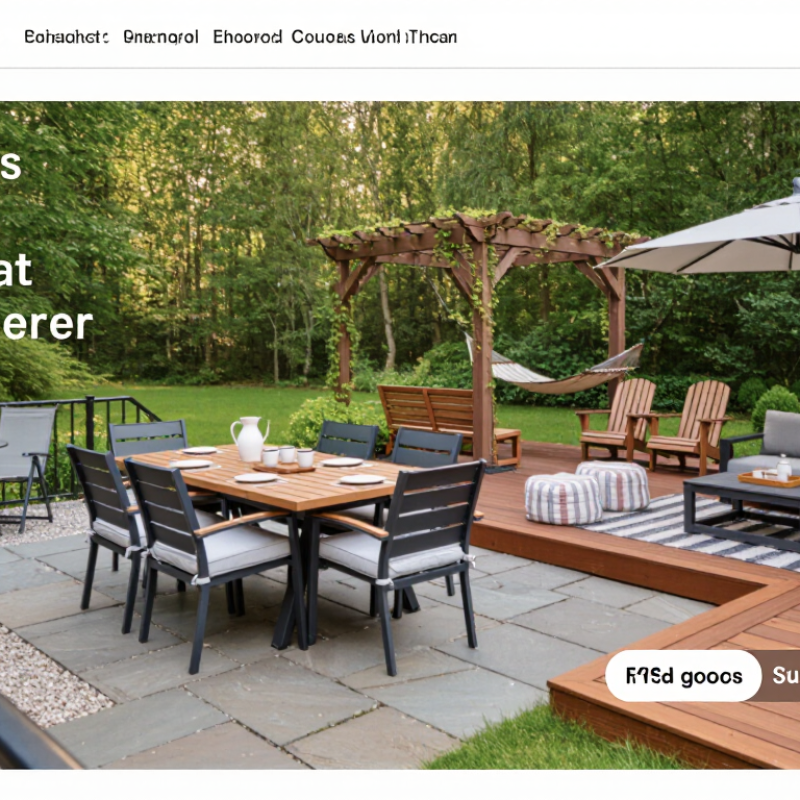
Outdoor furniture is best classified by what people do with it: sit, eat, recline, or store supplies. Seating includes dining chairs, benches, and deep-cushioned sofas. Dining tables support meals and work, while loungers and hammocks invite longer periods of rest. Small side tables keep drinks within reach. It sounds obvious, but function changes how a space feels.
The Grand View Research Outdoor Furniture Market report valued the global market at about $54.14 billion in 2023 and projected 5% annual growth from 2024 to 2030.
That broad market figure does not show which functions matter most in one household. For a narrow balcony, folding chairs and a compact table may be more useful than a large lounge set. On a patio, a dining table can anchor meals, while a bench with built-in storage holds cushions out of the rain. Shade structures serve another function: they make seating usable during strong sun. Measure the space before choosing. I have seen attractive sets crowd walkways; that mistake is easy to make. A simple layout sketch can reveal whether chairs still pull back comfortably.
Outdoor seating should fit the way a space is used, not just its dimensions. On a patio, dining chairs with a sturdy table suit meals and games. Choose seats with gently angled backs if people tend to linger. For a small balcony, a pair of compact bistro chairs can leave room to move. Small space, big impact.
Gardens invite a more relaxed mix. A weather-resistant bench near a path offers a place to pause, while lounge chairs work well beside a sunny wall. Check that chair legs sit firmly on the ground; uneven paving can make a seat wobble. A bench may look welcoming, though it is not always comfortable for long conversations. Cushions help, but they need a dry place when rain arrives.
Consider materials and upkeep alongside comfort. Metal chairs are often easy to wipe clean, while timber can feel warmer but may need occasional care. Woven seats can suit covered patios, yet their longevity depends on exposure and construction. Measure the usable area, including space to pull chairs back. Comfort matters. It is easy to buy a beautiful seat that blocks the balcony door or sits in full afternoon glare. Try the seat, if possible, and notice whether the armrests, height, and back support feel right for everyday use.
Outdoor tables anchor a patio, balcony, or garden meal, but they also collect books, garden gloves, and half-finished cups of tea. Choose a size that leaves room to pull out chairs and walk around them comfortably. Measure the space with chairs in place; an empty patio can look deceptively large. For everyday use, a smooth, nonporous top is easy to wipe after spills. Wood brings warmth and may need periodic cleaning or sealing, depending on its finish and exposure. Metal can be practical and relatively light, though its surface may heat up in strong sun. Small details matter.
Match the table to local weather and your routine. A covered area protects many surfaces, while an exposed table needs materials and finishes suited to rain, sun, and temperature changes. Check joints and fasteners now and then, especially after a windy season. If you often host meals, allow enough tabletop space for serving dishes without crowding plates. For a small balcony, a compact or folding table may be more useful than a grand centerpiece. Measure twice. I once underestimated how much chair space mattered; the table fit, but moving around it felt awkward. That is worth considering before choosing a style.
Outdoor dining tables are typically dining-chair height, while bar tables are taller. Coffee and side tables sit lower for lounging and occasional use. Bars show the midpoint of each typical height range; actual dimensions vary by design.
Lounge furniture makes an outdoor space useful for more than meals. A reclining chaise lets you shift between reading upright and resting flat. Look for an adjustable back, a stable frame, and a surface that dries quickly after a shower. On hot afternoons, breathable sling fabric can feel less stuffy than a thick cushion. Still, comfort is personal; a firm seat may suit one person and frustrate another.
For sunbathing, place loungers where you can follow the shade rather than committing to one exposed corner. A lightweight side table keeps water, a book, and sunglasses within reach. Keep small objects off the ground. Check that the chaise legs sit evenly on your patio or deck, especially if the surface has a slight slope. A removable cushion is handy, but it needs somewhere dry to go when the weather changes.
Daybeds and outdoor sofas offer room to stretch out, though they need more floor space. Measure the path around them before buying; a beautiful lounger is awkward when it blocks the door. Leave enough space to recline fully without striking a wall or table. I would not choose a fabric by appearance alone. Sunlight can fade colors, and damp cushions can stay uncomfortable longer than expected. A little upkeep is part of relaxing outdoors.
Outdoor storage furniture can keep a patio usable between gatherings. A storage bench holds folded cushions, while a deck box keeps smaller items close at hand. Choose a size that fits the space without blocking a path or door. Look for a well-fitting lid, drainage, and materials suited to local weather. “Weather-resistant” does not always mean fully waterproof. Small details matter.
Shade furniture makes sunny areas more comfortable. A movable umbrella can cover a dining table, while a pergola offers a steadier shaded spot. Measure the area at different times of day; morning shade may disappear by lunch. Check that an umbrella base is heavy enough for its size and expected conditions. In gusty weather, close it. A little planning helps.
Storage and shade work best when they support everyday routines. Keep cushions near the seats where they are used, and place the shade where people actually gather. Leave room to open storage lids fully. I once underestimated that clearance, and the bench became awkward to use. It is a small mistake, but an easy one to repeat. Periodically check hinges, fabric, and fasteners for wear.
Typical dimensions and capacities are approximate; they vary by design. Check product specifications and local weather suitability before choosing.
| Furniture Type | Primary Use | Typical Size or Capacity | Best Suited For | Practical Considerations |
|---|---|---|---|---|
| Outdoor storage bench | Provides seating and stores items such as cushions, toys, or gardening supplies. | Often about 4–6 ft wide; storage capacity commonly ranges from approximately 30–80 gallons. | Patios, porches, and garden paths where extra seating is useful. | Look for a lid that opens safely and ventilation that helps reduce moisture buildup. Not every bench is fully waterproof. |
| Deck box | Stores cushions, pool accessories, and outdoor tools. | Compact models may hold around 30–50 gallons; larger models often hold about 100–150 gallons or more. | Decks, balconies, and poolside areas with floor space available. | Confirm the internal dimensions fit the items being stored. A water-resistant design is not necessarily waterproof or suitable for prolonged heavy rain. |
| Outdoor storage cabinet | Keeps smaller equipment and supplies organized behind doors or shelves. | Commonly around 2–4 ft wide and 3–6 ft tall, depending on the design. | Patios, balconies, and covered outdoor work areas. | Check shelf load limits, door clearance, and anchoring requirements. Metal and resin models may need different care. |
| Outdoor storage shed | Provides larger, enclosed storage for tools, furniture, or equipment. | Small examples start near 4 × 6 ft; larger sheds can be substantially bigger. | Gardens and yards with enough space for access and installation. | Allow room for doors and maintenance. Local rules may apply to shed size, placement, foundations, or permits. |
| Patio umbrella | Creates movable shade over a table or seating area. | Canopy diameters commonly range from about 6–11 ft. | Dining sets, small patios, and flexible seating layouts. | Choose a stable, appropriately weighted base. Close or secure the umbrella in strong winds and follow its care instructions. |
| Pergola | Defines an outdoor seating or dining area and provides partial shade. | Freestanding examples often measure roughly 8 × 8 ft to 12 × 12 ft, with other sizes available. | Decks, patios, and garden entertaining spaces. | An open-slat pergola does not provide complete rain or sun protection. A suitable canopy or roof changes its shade and weather performance. |
| Gazebo | Creates a covered gathering area with shade and, depending on its design, shelter from light rain. | Portable and permanent models commonly have footprints around 8 × 8 ft to 12 × 12 ft. | Larger patios, lawns, and outdoor dining areas. | Secure it according to the instructions. Fabric canopies may need to be removed or protected in severe weather. |
| Shade sail | Provides overhead shade across an open area. | Available in several shapes and sizes; common examples span roughly 10–20 ft per side or across a similar distance. | Patios, play areas, and yards with suitable mounting points. | Correct tension, mounting height, drainage angle, and wind suitability matter. Installation requires secure supports. |
Dining chairs with sturdy backs pair well with a solid table. Angled backs can feel better during long meals.
Choose two compact chairs and a small or folding table. Leave room to open the door and pull chairs back. Measure first.
A weather-resistant bench near a path creates a handy pause. Lounge chairs work well beside a sunny wall.
Check that each leg sits firmly on the ground. Uneven paving may need attention.
Metal is often easy to wipe clean. Timber feels warm but may need occasional care. Exposure matters.
Cushions can make a bench more comfortable for conversation. Keep them somewhere dry when rain arrives.
Measure the space with chairs in place. Allow room to walk around and set down serving dishes.
Strong sun can heat some metal surfaces. Rain and temperature changes can wear exposed finishes. Check joints after windy weather.
Try it if possible. Check the height, armrests, and back support. A beautiful chair can still feel wrong.
Outdoor Furniture is commonly classified by the way it is used and the needs it meets in an outdoor space. Seating options include chairs, benches, and sofas suited to patios, gardens, and balconies, with different sizes and arrangements helping make small or spacious areas comfortable. Outdoor tables support dining, serving, or everyday activities, and their shapes and heights can be chosen to suit the setting.
For relaxing, lounge furniture such as reclining chairs and sun loungers creates a place to unwind or enjoy the sun. Storage pieces help keep cushions and outdoor essentials organized, while shade furniture, including umbrellas and canopies, offers relief from direct sunlight. Together, these types can make an outdoor area more practical and inviting, whether it is used for meals, quiet breaks, or gathering with others.