Precision Outdoor Seating & Dining Systems
Manufactured using seasoned Indonesian Grade-A Teak, aviation-grade 6063-T6 aluminum alloys, and high-performance weatherproofing matrices built for demanding resort environments.


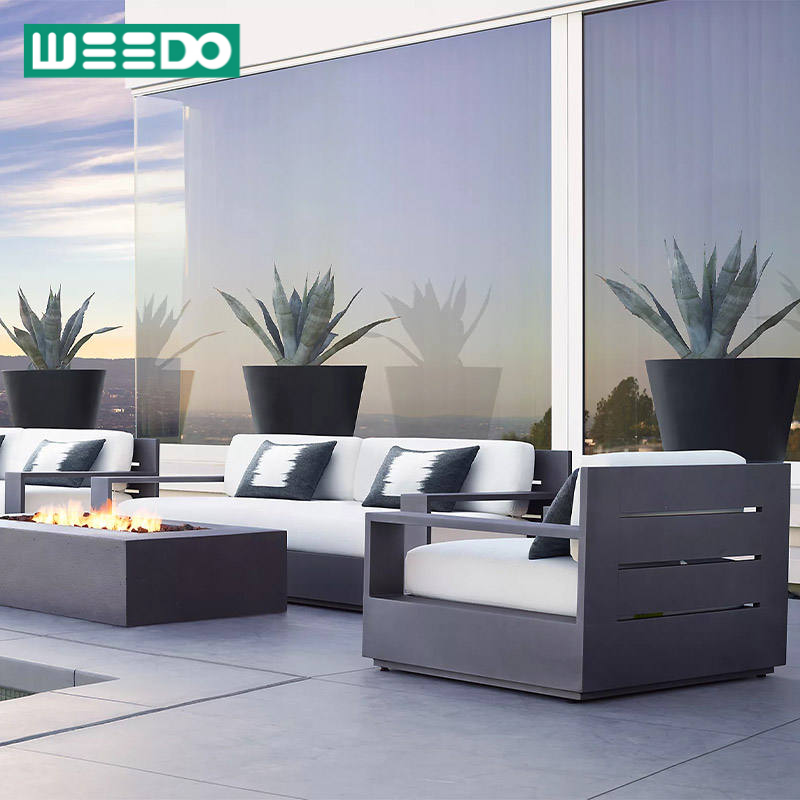
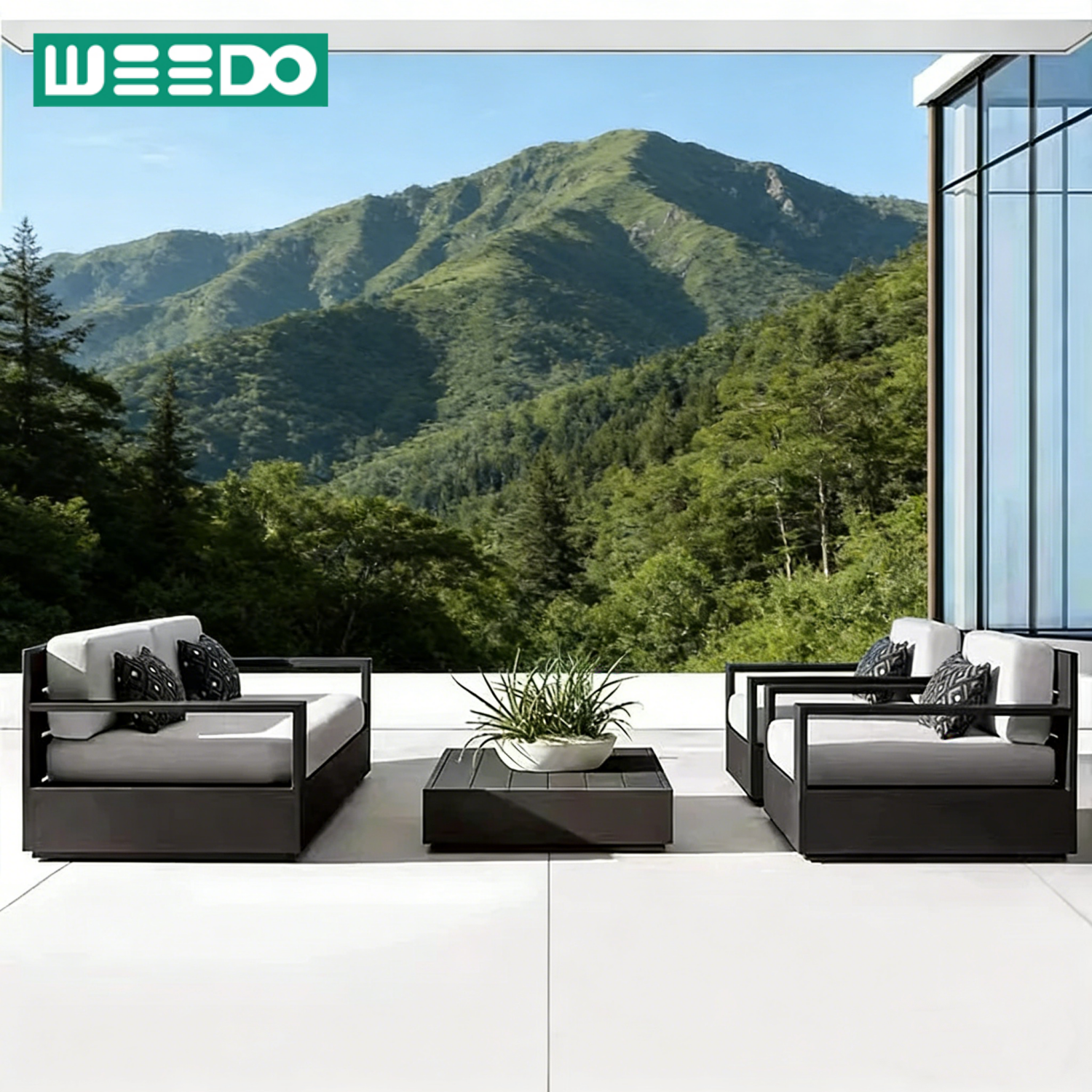
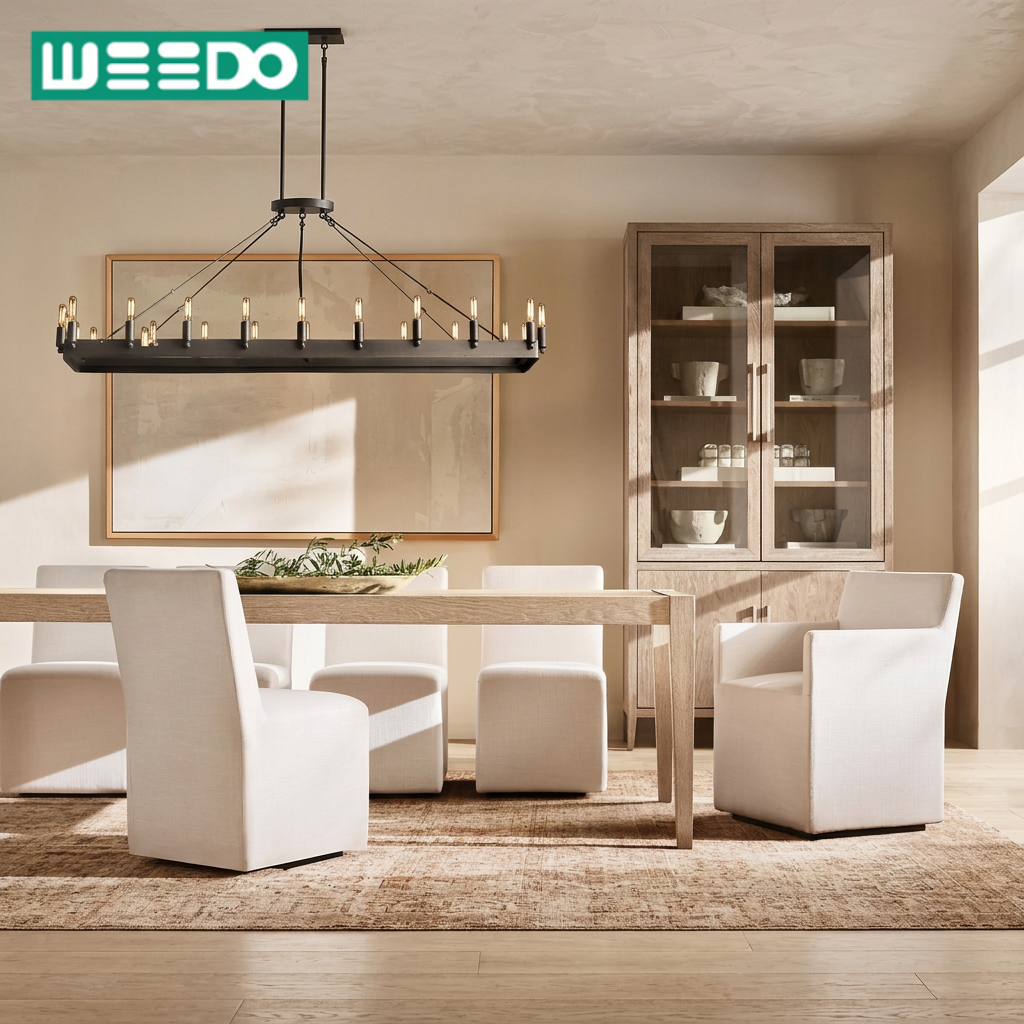
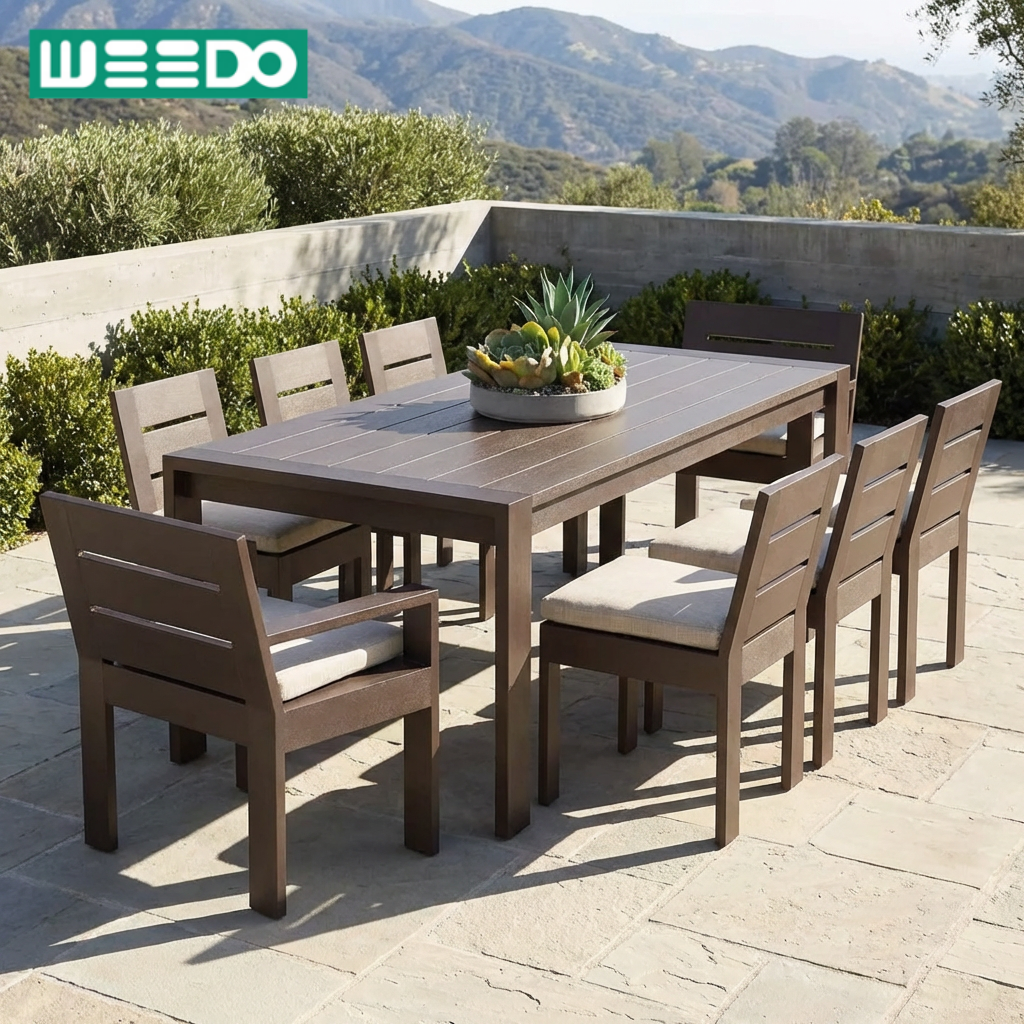
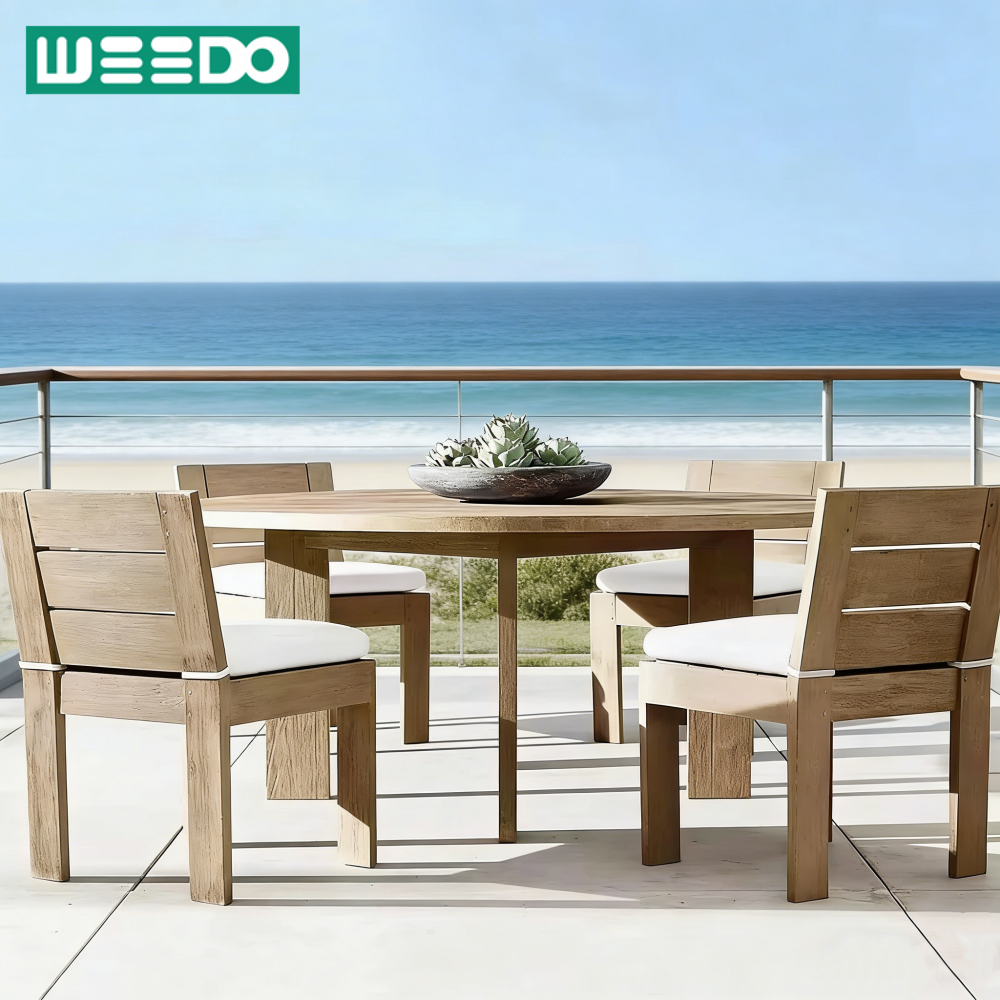
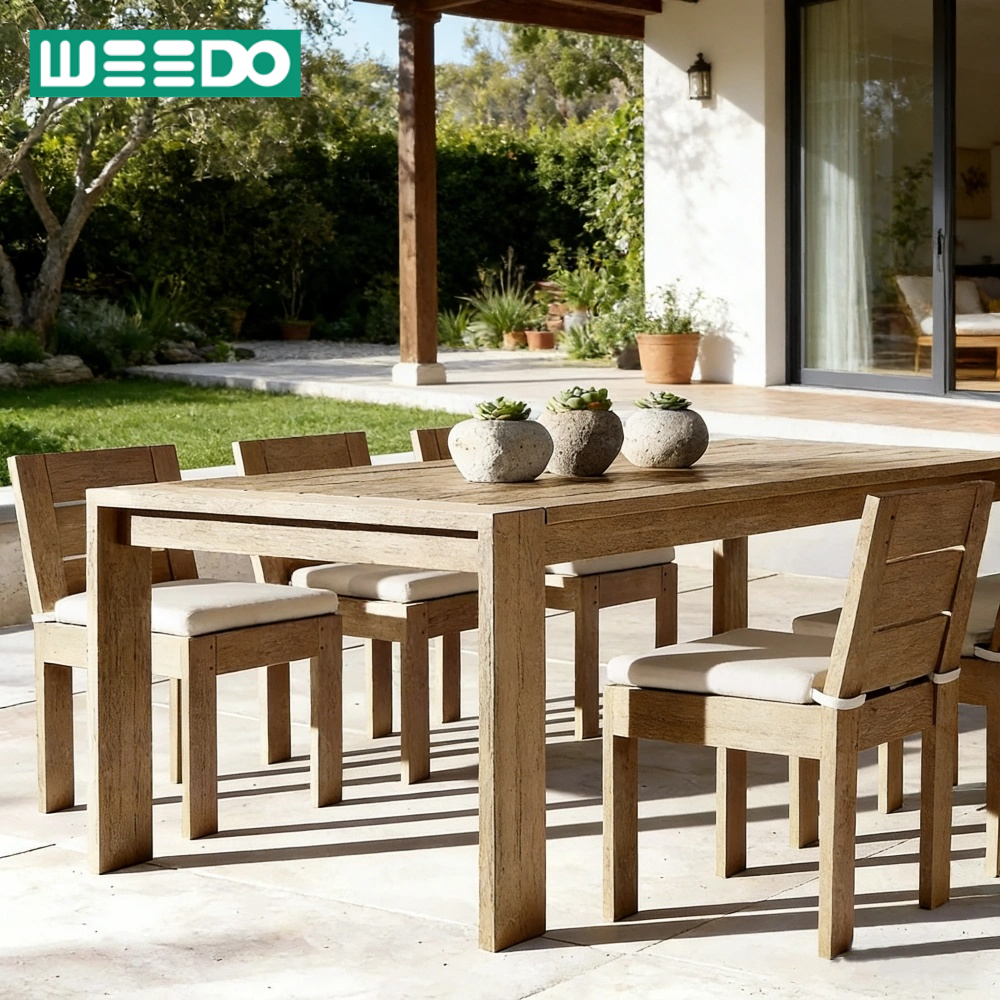
Precision Manufacturing Directly From Foshan, China
Eliminating middlemen by consolidating raw material milling, automated CNC frame processing, robotic welding, electrostatic powder coating, and master upholstery under one audited roof.
Grade-A Burmese & Indonesian Teak
We source certified heartwood containing natural rubber and silicates, dried in automated kilns to a stable 10–12% moisture profile to prevent structural splitting, warping, and fungal degradation under tropical solar exposure.
Substructure & TIG Welding
Aluminum profiles feature a continuous wall thickness ranging from 1.8mm to 2.5mm. Internal reinforces and 360-degree precision TIG shielding joints guarantee contract-grade structural load limits compliant with EN 581 standards.
Multi-Stage Electrostatic Coating
Pre-treated via multi-tier deoxidation and chemical passivation rinsing, our metal frames undergo AkzoNobel exterior thermosetting fluorocarbon or polyester powder sintering for maximum marine-environment anti-corrosion defense.
Emerging Sourcing Dynamics for Commercial Outdoor Furniture
Market intelligence, regulatory shifts, and technical advancements reshaping how developers, procurement houses, and wholesalers specify commercial garden furniture.
The global specification market for exterior living systems has evolved beyond basic aesthetic form factors. Today, project directors, landscape architects, and global procurement houses face shifting operational challenges dictated by extreme climatic fluctuation, aggressive decarbonization directives, and rising container logistics tariffs. Successfully navigating container allocations demands a deep technical understanding of upcoming industry dynamics.
Hybrid Material Symbiosis
Architects are departing from monolithic material applications. Modern collections integrate solid Grade-A teak horizontal arm rails with powder-coated aluminum structural skeletons and UV-stabilized Italian olefin strap weaves, marrying tactile warmth with rust-free durability.
Quick-Dry Reticulated Foam
Conventional closed-cell cushioning is rapidly becoming obsolete in commercial hospitality. Modern specifications require open-pore reticulated polyether foams that allow water to drain immediately under gravity, eliminating moisture accumulation, mold, and rot.
Knock-Down (KD) Cube Optimization
With international ocean freight volatility, commercial specifiers mandate modular Knock-Down (KD) structures engineered with tight mechanical tolerances. This innovation drops CBM requirements by up to 58% per container without sacrificing static load strength.
Engineering Standards: CLENT Commercial Criteria vs. Commodity Market Grade
A transparent side-by-side engineering breakdown illustrating why contract-grade manufacturing delivers superior return on investment over standard consumer-grade outdoor furniture.
| Evaluation Parameter | CLENT Industrial Specification | Commodity Wholesale Benchmark | Commercial Operational Impact |
|---|---|---|---|
| Timber Integrity & Grade | Grade-A Plantation Teak, Heartwood only, Kiln-dried to 10–12% MC | Sapwood-mixed Grade-B/C teak, Air-dried (>18% MC) | Eliminates longitudinal checking, joint cracking, and termite penetration. |
| Metal Substructure | Virgin 6063-T6 Aluminum (1.8mm–2.5mm wall profile) | Recycled aluminum scraps (<1.2mm wall thickness) | Prevents buckling under intensive commercial usage; guaranteed structural rigidity. |
| Surface Protection | Pre-treated passivation + AkzoNobel electrostatic powder sinter | Direct single-coat liquid paint without anti-corrosive priming | Resists micro-fissuring, chalking, and salt-fog oxidation in coastal resorts. |
| Woven Cordage & Webbing | Solution-Dyed Olefin / High-Density Polyethylene (>2,000 UV hrs) | Recycled PP cords (Degrades under <500 sunlight hours) | Maintains tensile elasticity, resists tensile snap, and retains pigment fidelity. |
| Joinery Hardware | Marine-grade SUS 304 / 316 Stainless Steel bolts & inserts | Zinc-plated or standard galvanized iron fixings | Avoids unsightly galvanic corrosion bleed, structural shearing, and rust stains. |
Frequently Addressed Commercial Sourcing Inquiries
Direct answers from our engineering desk covering technical compliance, customization, container loading, and warranty validation.
How does your facility verify the moisture content of Grade-A teak before assembly?
Timber boards undergo strict computerized kiln drying for 21 to 28 days. Every blank is scanned with digital pin-type moisture meters across three cross-sections to guarantee the moisture equilibrium stays precisely between 10% and 12%, preventing warping across diverse global microclimates.
Can you manufacture customized frames according to designer CAD/BIM specifications?
Yes. Our in-house engineering team provides complete OEM/ODM translation services. We intake SolidWorks, AutoCAD, and Rhino 3D files to create structural shop drawings, rapid prototype molds, and full-scale pre-production samples for client review within 14 business days.
What cushion configurations are recommended for exposed, rainy resort terraces?
We configure cushions with open-cell reticulated quick-dry foam wrapped in Dacron mesh liners, combined with solution-dyed acrylic or olefin textiles featuring water-repellent backing. Cushion undersides incorporate breathable vinyl textilene mesh vents to accelerate drainage.
How are high-cube containers optimized to prevent in-transit scratching and crushing?
Every piece is encased in non-woven scratch-proof fleece, reinforced with 5-ply rigid edge angle boards, and wrapped in moisture-barrier PE shrink film. Finished sets are packaged in heavy-duty 250 lbs test honeycomb export cartons, stacked using CAD-simulated container load plans.
What quality testing protocols are applied to structural sofa frames before packing?
Our QC team follows EN 581-1/2 commercial contract test criteria, carrying out static seat load tests up to 200 kg per seat, backrest fatigue cycle tests over 10,000 cycles, and 480-hour neutral salt spray (ASTM B117) checks on all powder-coated metals and stainless hardware.
What minimum order quantity (MOQ) and production turnaround times do you require?
Standard OEM collections require a flexible MOQ of one 20GP container (mixed SKUs allowed across up to 3 distinct designs). Production cycles typically range from 30 to 45 days, depending on material specifications, with expedited tracks available for time-sensitive hospitality openings.
Launch Your Custom Outdoor Furniture Programme
Connect directly with our Foshan engineering and supply team to request material swatch samples, schedule virtual factory audits, or receive itemized FOB/CIF quotations for your pending project.