Featured OEM Poolside Collections & Contract Furniture
Engineered to withstand direct ultraviolet degradation, severe saline air, and persistent chemical splash from pool chlorine. Precision-machined at our Foshan facility with Grade-A teak and extruded 6063 aluminum alloy.
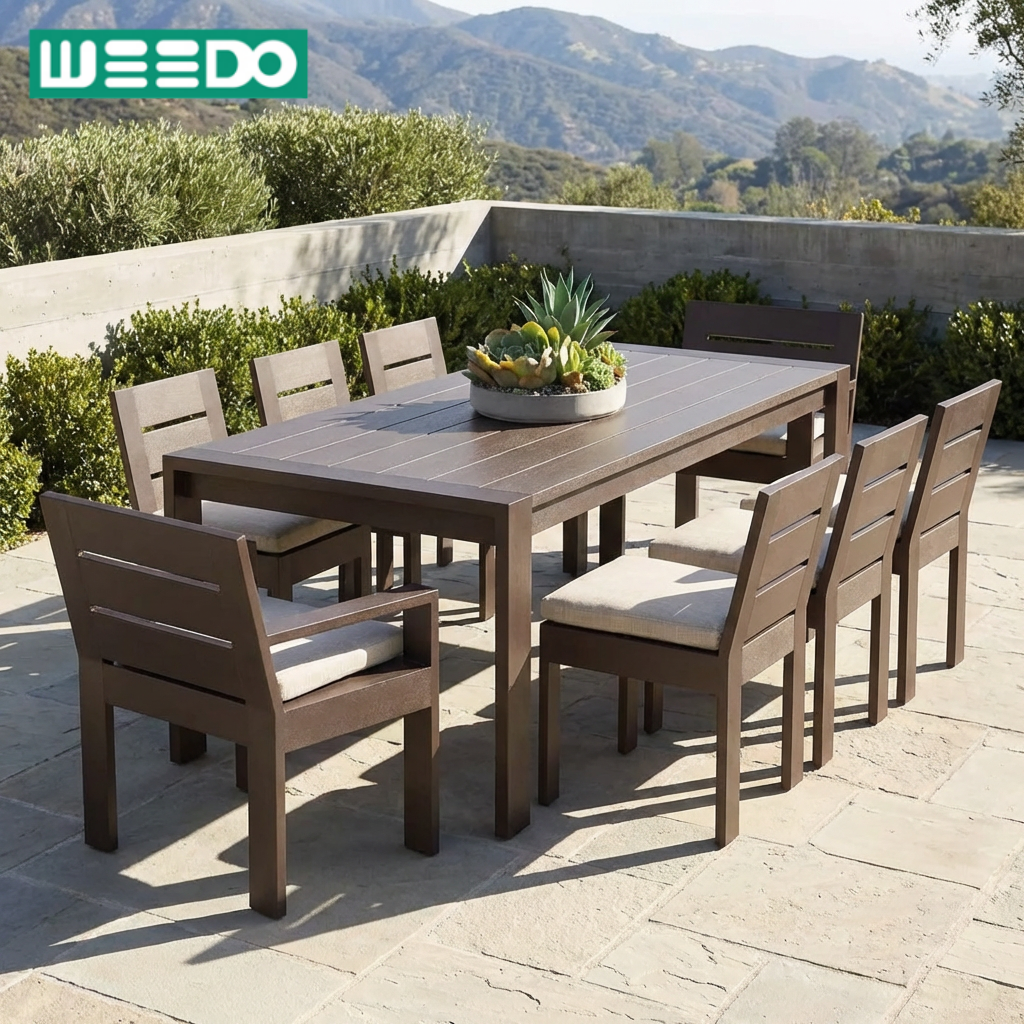
Modern Durable Aluminum Garden Furniture Metal Outdoor Dining Table Set with Quick-Dry Cushions
- Framework: 6063-T6 Powder-Coated Al
- Textile: Solution-Dyed Acrylic / Olefin
- Application: Pool Deck Bistro / Resort Terrace
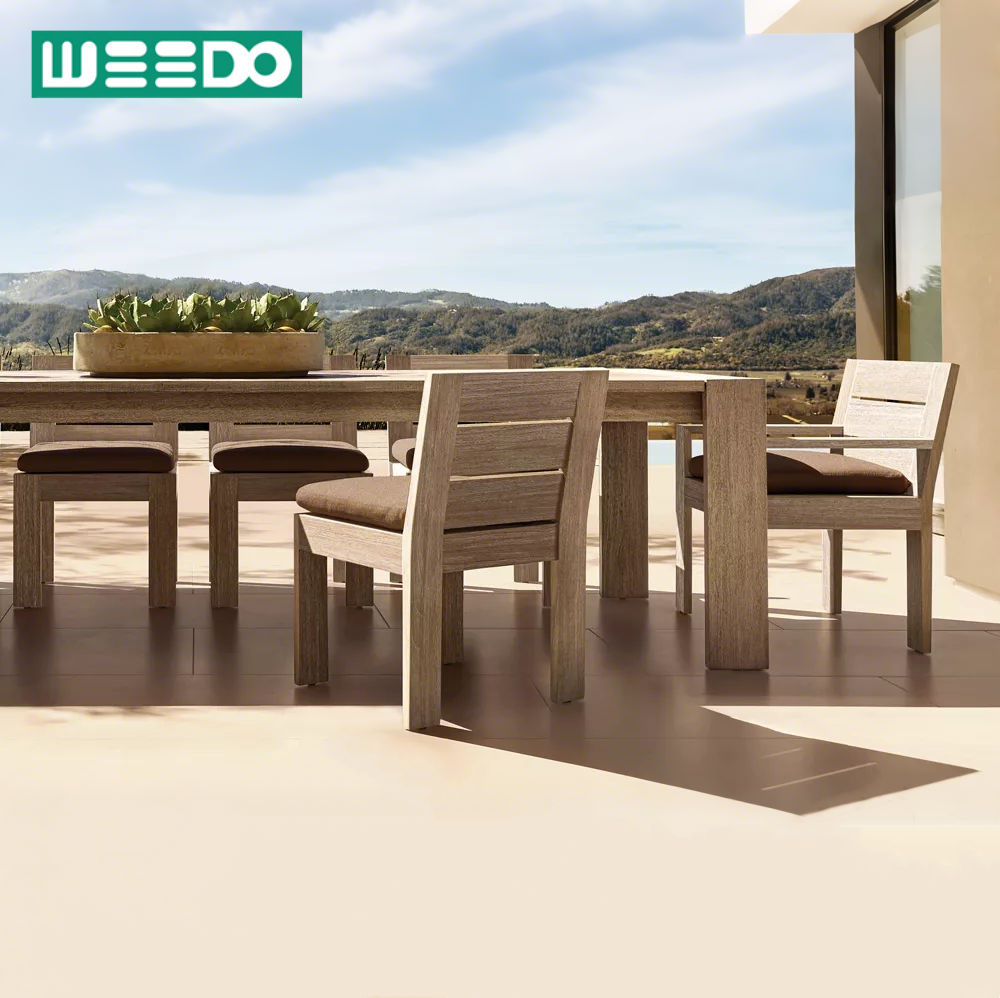
Outdoor Furniture Set Patio Outdoor Teak Wood Outdoor Sofa Set Waterproof Couch Villa Resort Set
- Timber Grade: FSC Kiln-Dried Teak (10-12% MC)
- Core Cushion: Open-Cell Reticulated Foam
- Hardware: 304 / 316 Marine Stainless
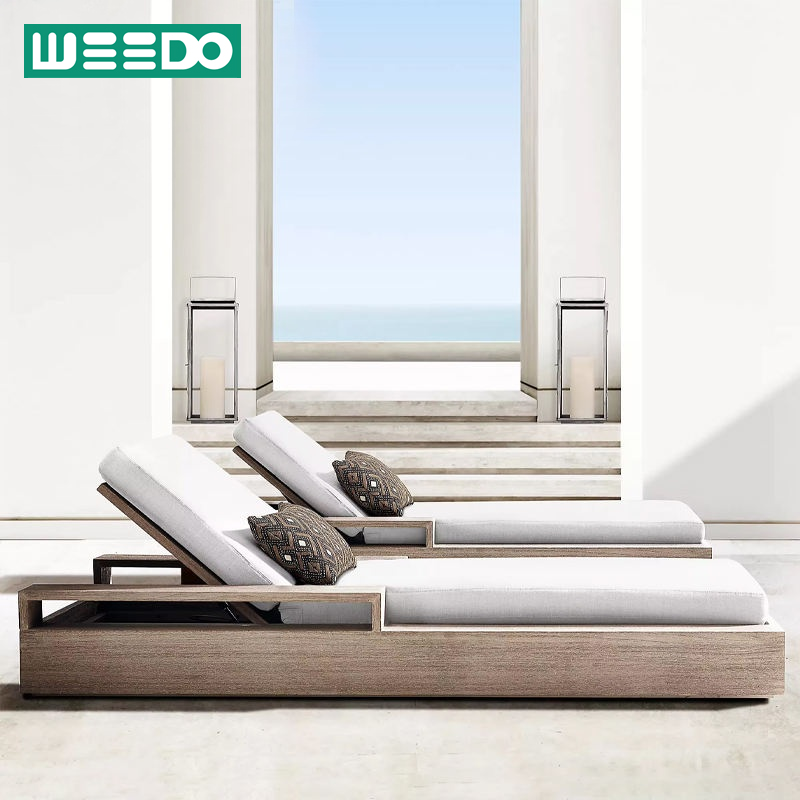
Custom Patio Garden Hotel Beach Swimming Pool Bed Sunbed Leisure Chaise Teak Daybed Lounger
- Structure: Mortise & Tenon Joinery
- Mechanism: 5-Position Stainless Recline
- Fabric: Water-Repellent Hydrophobic Shell
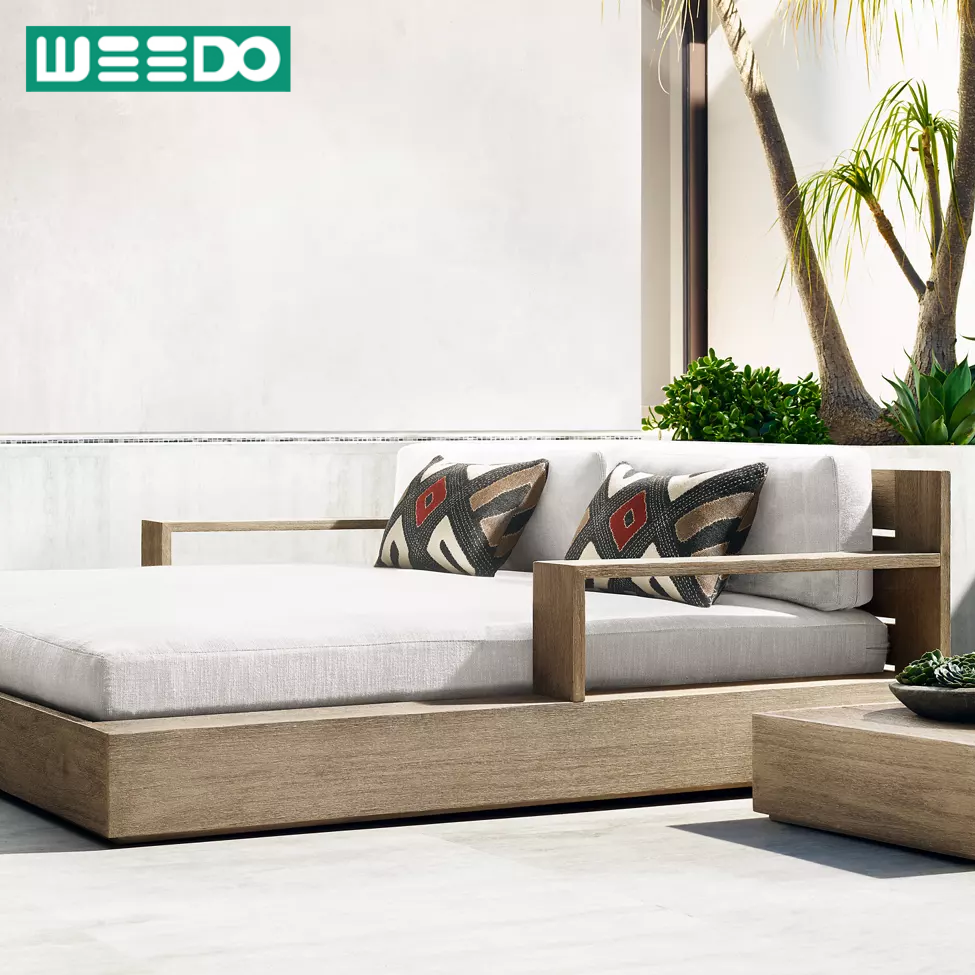
Modern Outdoor Daybed Villa Teak Wood Poolside Daybed Luxury Hotel Outdoor Furniture Resort Sunbed
- Weave Accent: UV-Stabilized Olefin Rope
- Load Rating: Static 350kg Commercial Test
- Options: Custom Retractable Sun Canopy
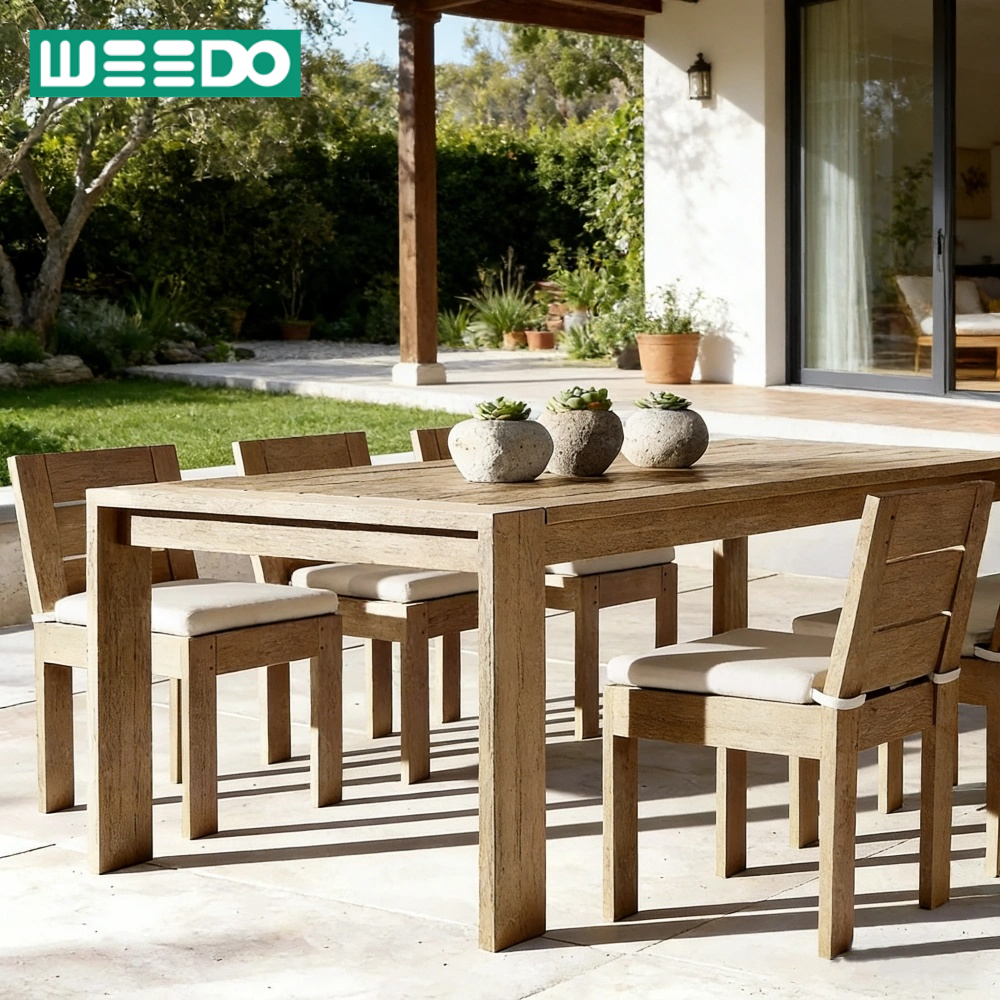
Hotel Courtyard Outdoor Table and Chair Set Resort Patio Furniture Teak Wood Luxury Dining Set
- Top Material: Solid Teak Expansion Slats
- Chair Frame: Hybrid Teak & Alloy Base
- Finishing: Natural Weathered / Teak Shield

Modern Aluminum Outdoor Sofa Terrace Furniture Durable Garden Set Resort L-Shaped Sectional
- Coating: AkzoNobel Outdoor Interpon Powder
- Modularity: Quick-Lock Inter-Seat Clamps
- Drainage: Mesh-Bottom Permeable Frame
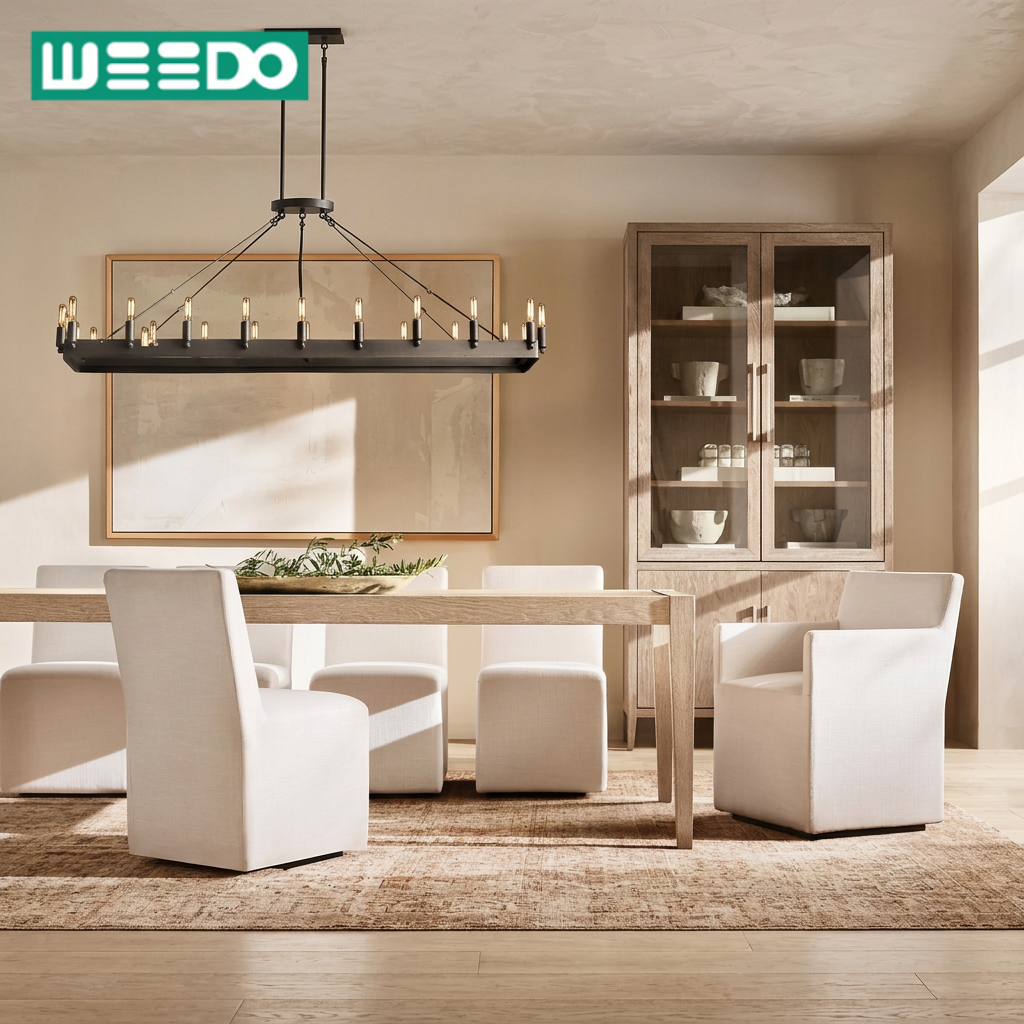
Custom Luxury Dining Room Chair with Hardwood Frame Elegant Indoor Dining Chair for Hotel Coffee Shop
- Wood Core: Select Seasoned Hardwood
- Joinery: Reinforced Corner Block Bracing
- Upholstery: Stain-Resistant Contract Fabric
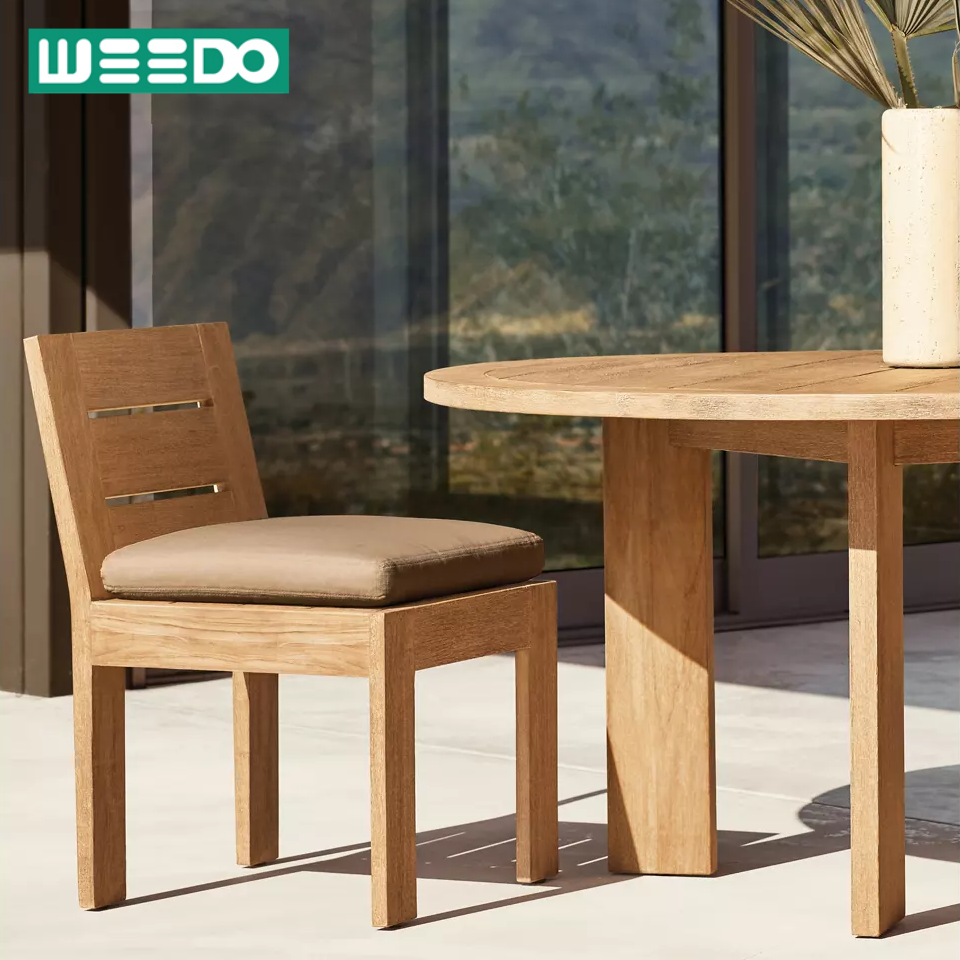
Wholesale Outdoor Table Chair Set Solid Teak Wood Outdoor Dining Set Durable Courtyard Hotel Furniture
- Capacities: 6 to 10 Pax Commercial Sizing
- Slat Gap: 6mm Hydro-Drainage Spacing
- Packing: KD Export Flat-Pack (High CBM)
Engineering Commercial Poolside Furniture: Metallurgy, Botany, and Hydro-Resilience
Procuring outdoor contract furniture for commercial swimming pool zones, oceanfront beach clubs, and five-star resort sundecks presents an aggressive engineering challenge distinct from ordinary residential patio specification. Poolside microclimates subject materials to continuous cyclic degradation: splash zones saturated with chlorine (hypochlorous acid) or saline electrolysis, persistent atmospheric humidity, rapid thermal swings from blistering daytime sun exposure to cool condensation at night, and excessive mechanical fatigue from high guest turnover.
1. Metallurgy & Surface Passivation: 6063-T6 Aluminum Profiles
At Foshan CLENT Outdoor Furniture Co., Ltd., commercial poolside metal fabrication utilizes structural 6063-T6 aluminum extrusion with wall thicknesses strictly calibrated between 1.8mm and 2.5mm at principal stress junctions. Unlike lightweight 1.0mm-1.2mm domestic tubing, structural profiles prevent deflection under repeated heavy impact loads. To achieve complete corrosion resistance against airborne chlorides and pool sanitation chemistry, metal frames undergo an intensive multi-stage pre-treatment bath (degreasing, acid etching, and zirconium-based conversion passivation) prior to electrostatic powder deposition.
We finish frames using architectural Qualicoat Class 2 thermosetting polyester powders (including AkzoNobel Interpon and Tiger Drylac), cured at 200°C to achieve a dry film thickness of 70–90 microns. This continuous polymer skin passes rigorous 1,000-hour ASTM B117 salt spray testing without micro-cracking, blistering, or delamination, guaranteeing resilient performance alongside heated salt-chlorinated swimming pools.
2. Botanical Integrity: Kiln-Dried Grade-A Teak (Tectona grandis)
Teak remains the premier botanical material for wet poolside and marine deck installations due to its exceptionally dense silica grain and concentrated natural tectoquinone oils. However, poorly processed sapwood or fast-grown plantation teak often rots or warps prematurely. CLENT exclusively selects slow-matured Grade-A teak heartwood from sustainable, legally verified concessions.
The timber undergoes specialized computerized kiln drying, lowering core moisture content to an equilibrium of 10%–12%. This precision thermal conditioning arrests cell-wall shrinkage, preventing the expansion, checking, and twisting that occur when damp wood meets searing poolside sun. Every joint is machined via computer numerical control (CNC) mortise-and-tenon interlocking configurations, bonded with waterproof polyurethane adhesives (D4 standard) and reinforced with marine-grade 304 or 316 stainless steel fasteners. In poolside usage, the wood can be maintained with hydrophobic teak shield polymers or allowed to naturally oxidize into a refined, silver-grey patina without losing structural cohesion.
3. Material Performance Matrix: Commercial Poolside Benchmarking
| Material Specification | Chlorine / Chemical Resistance | UV Degradation Limit | Tensile / Load Capacity | Drainage / Dry Time | Expected Commercial Lifespan |
|---|---|---|---|---|---|
| CLENT Grade-A Kiln-Dried Teak | High (Natural barrier via tectoquinone oils) | Extreme (>5,000 hrs; forms silver patina) | Very High (>350 kg static load) | Rapid (Slatted 6mm water run-off) | 10 – 15+ Years (Renewable surface) |
| 6063-T6 Al + Qualicoat Powder | Exceptional (No chemical pitting) | High (1,500+ hrs Xenon Arc delta-E < 2) | High (Structural reinforced corners) | Immediate (Non-porous framework) | 8 – 12 Years |
| Reticulated Open-Cell Cushion Foam | Immune to chemical accumulation | Protected beneath solution-dyed shell | Resilient (Does not collapse or sag) | Instant (< 20 mins post-soaking) | 5 – 7 Years (Replaceable cover) |
| UV-Stabilized Olefin / Acrylic Cord | Resistant to bleach & pool chemicals | High (AATCC 16.3 Grade 4.5 @ 1200 hrs) | Break force > 2.2 kN commercial weave | Hydrophobic (Zero water absorption) | 5 – 8 Years |
| Standard Residential PVC / PE Wicker | Poor (Becomes brittle from pool salts) | Low (Fades and cracks within 600 hrs) | Moderate (Deforms under 120 kg) | Sponge trapping inside hollow cords | 1 – 2 Years (High replacement cost) |
4. Hydrophobic Textiles & Reticulated Drainage Foam Technology
A primary frustration for pool deck managers is waterlogged cushions that harbor mold, emit sour odors, and stay damp hours after guests leave the water. Our contract seating systems eliminate this failure through dual-layer hydro-engineering: solution-dyed acrylic or olefin upholstery combined with fully reticulated open-cell polyurethane foam cores (dry-fast foam).
In reticulated foam (typically calibrated at 30 to 45 pores per inch), the cellular membranes have been thermally combusted, creating a completely open, porous framework resembling a honeycomb structure. Water flows straight through without capillary retention. Combined with textilene mesh underside vents and covers dyed at the liquid polymer stage, our cushions resist UV bleaching, dry within 20 minutes of complete submersion, and remain clean throughout heavy resort operational cycles.
Why International Hotel Groups Partner with CLENT
Operating within China's premier furniture industrial cluster in Foshan, Guangdong, Foshan CLENT Outdoor Furniture Co., Ltd. controls the complete supply chain from raw log sawing to CNC machining, specialized welding, hand-weaving, and final container loading.
Precision CNC Machining & Jig Assembly
We utilize multi-axis CNC timber routing and laser metal profiling to maintain dimensional tolerances within ±0.5mm. This guarantees absolute interchangeability of modular sofa components, sunbed chassis, and knock-down hardware across multiple shipping containers.
Full-Spectrum In-House Quality Assurance
From kiln lumber moisture testing (10-12% target) to cross-hatch powder-coat adhesion tests and static weight load checks (EN 581 standards), every production lot is logged. We deliver transparent pre-shipment photographic inspections and welcome third-party agencies (SGS, TÜV).
Container Optimization & Export Packaging
Long-distance ocean freight demands advanced protective engineering. We utilize multi-layer PE foam wraps, double-fluted edge protectors, and custom nestable knock-down (KD) structures to maximize 40ft HQ cubic meter (CBM) capacity and reduce landed shipping costs per unit.
Future Procurement Trends in Commercial Poolside Furniture
Hospitality procurement strategies are shifting dramatically. Developers and hotel brands now prioritize sustainability, modular lifecycle maintenance, and smart technological features over short-lived throwaway furniture.
Circular Design & Modular Repairability
Chains like Marriott and Accor increasingly require sun loungers and cabanas engineered with easily unbolted, replaceable components. If a single slat or armrest sustains damage, staff can swap the part on-site without discarding the entire structural chassis.
Mandatory FSC Chain-of-Custody & ESG
Institutional buyers must document strict environmental stewardship. The demand for 100% legal, FSC-certified or SVLK-tracked plantation teak with transparent chain-of-custody documentation has become a mandatory prequalification in luxury contract tenders.
Smart Daybeds with Integrated Amenities
High-end resort pool decks are transitioning from passive seating into tech-enabled hubs. Daybeds and cabanas are increasingly customized with embedded wireless Qi solar chargers, IP67 waterproof USB-C ports, and integrated LED accent lighting.
Biophilic Hybrid Material Textures
Pure minimalist aluminum is evolving into hybrid configurations that pair matte architectural powder-coated frames with warm tactile accents—such as Grade-A teak armrests, nautical rope weaves, and sintered stone or terrazzo occasional table surfaces.
The Technological Evolution of Commercial Poolside Seating
The poolside furniture industry has progressed through distinct technological generations. In the 1980s and 1990s, contract hospitality relied heavily on heavy painted cast-iron or basic extruded PVC tubular loungers wrapped in vinyl straps. While structurally inexpensive, cast iron quickly rusted from pool chemical exposure, leaving unsightly rust streaks across luxury pool decks, while PVC strap vinyl sagged, discolored, and snapped under solar UV heat.
The second generation introduced commercial synthetic PE rattan woven over lightweight welded aluminum frames. While this solved the immediate rust problem, low-grade plastic resins degraded under intense desert and equatorial UV rays, becoming brittle and unraveling within two to three seasons.
Today, the industry has entered its Third Generation: High-Performance Composite Architecture. Modern contract installations demand structural aluminum alloys (6063-T6), high-density kilned Grade-A teak, marine 316-grade stainless hardware, solution-dyed hydrophobic textiles, and reticulated fast-draining open-cell foam cores. At CLENT, our OEM engineering merges these advanced material technologies with architectural customization, allowing designers to specify bespoke profile dimensions, powder coat hues, weave geometries, and tailor-made cushion packages that match any resort's architectural identity.
Commercial Poolside Procurement: Technical FAQ
Direct answers to common questions from project architects, hotel procurement directors, and international furniture distributors.
Launch Your Resort or Contract Poolside Project Today
Partner directly with Foshan CLENT Outdoor Furniture Co., Ltd. Gain factory-direct pricing, custom engineering consultation, certified material transparency, and robust export packaging tailored to your specifications.
Get Catalog