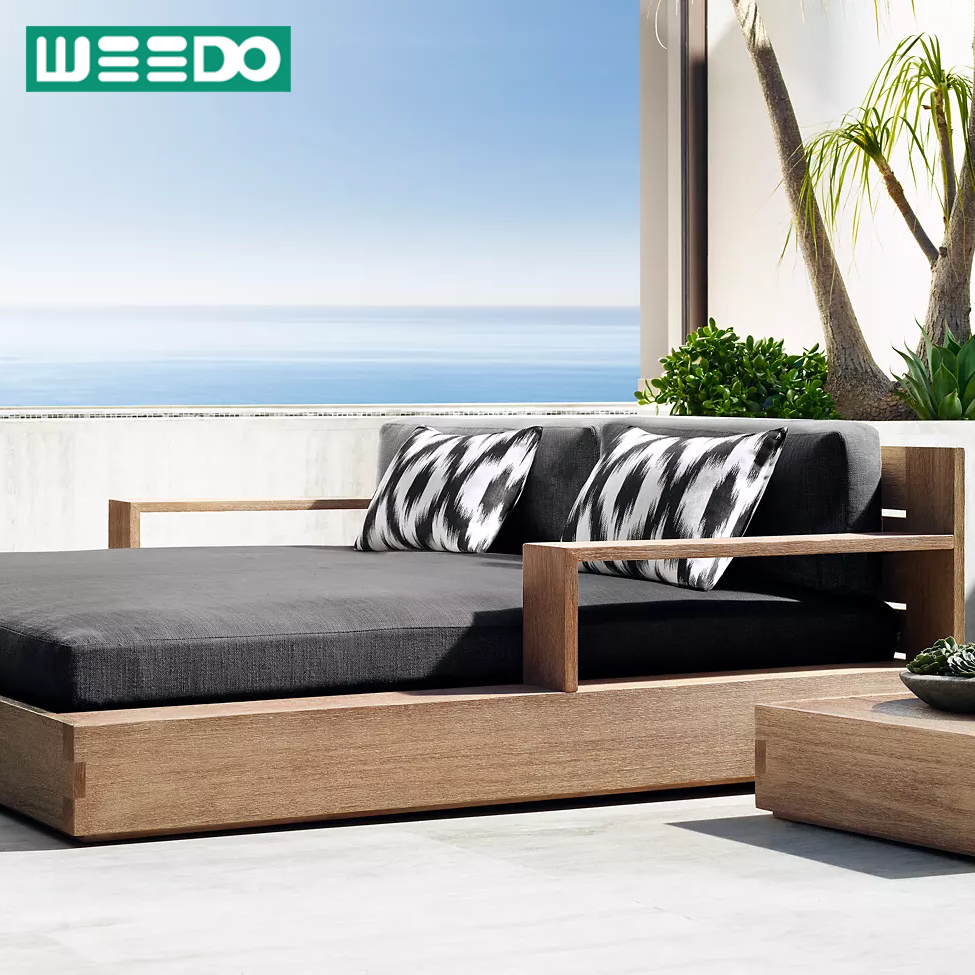
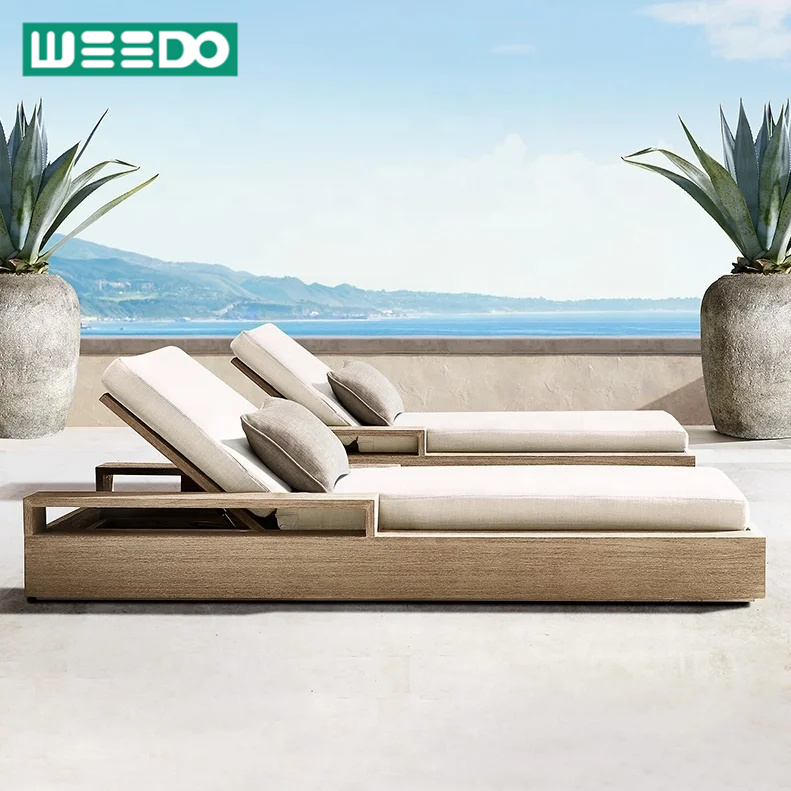
Outdoor Sun Lounger Poolside Furniture Wooden Daybed Teak Wood Lounge Bed
- Core Timber: Grade-A Kiln Teak
- Moisture Content: 10% – 12% Sealed
- Target Sector: Resort Pool Deck / Beach Club
Engineered in our Foshan precision manufacturing facility to withstand prolonged marine salt fog, cyclonic wind sheer, UV degradation, and intensive hospitality contract turnover.


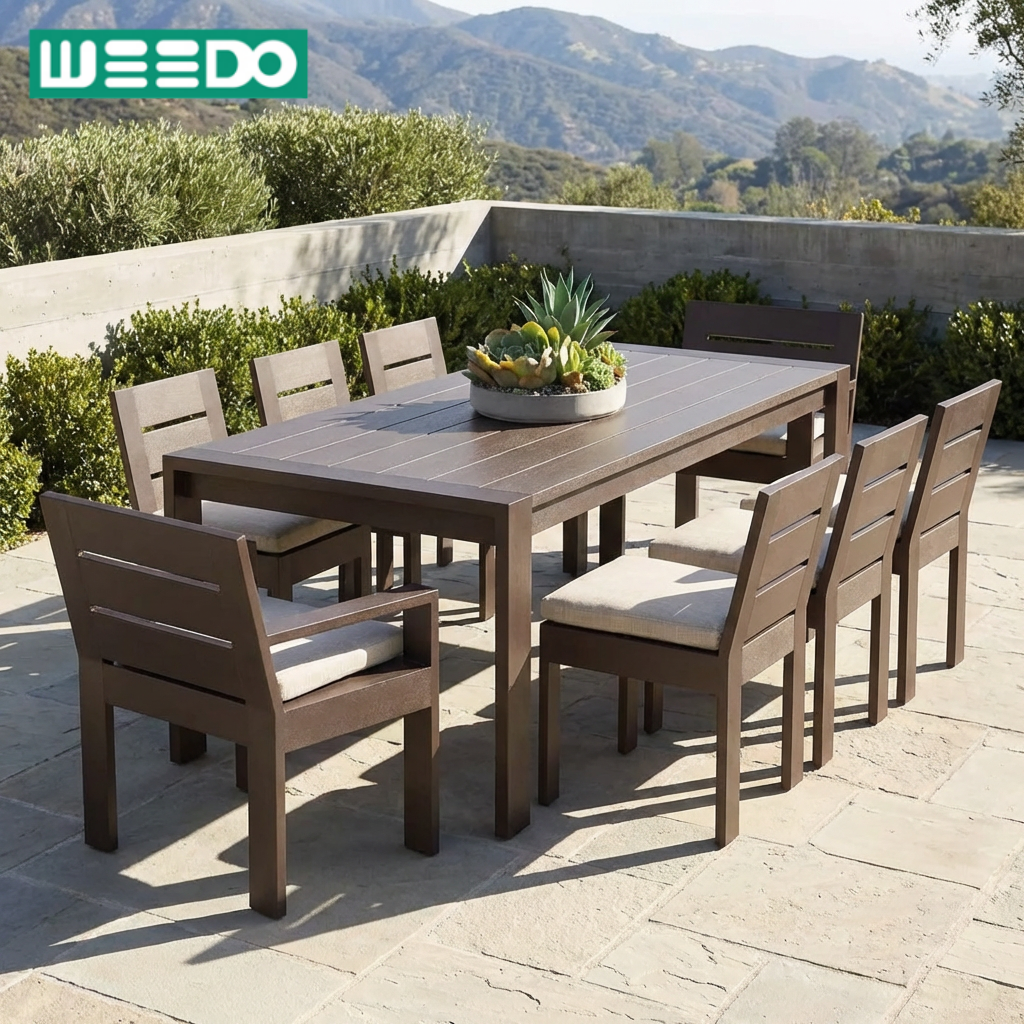
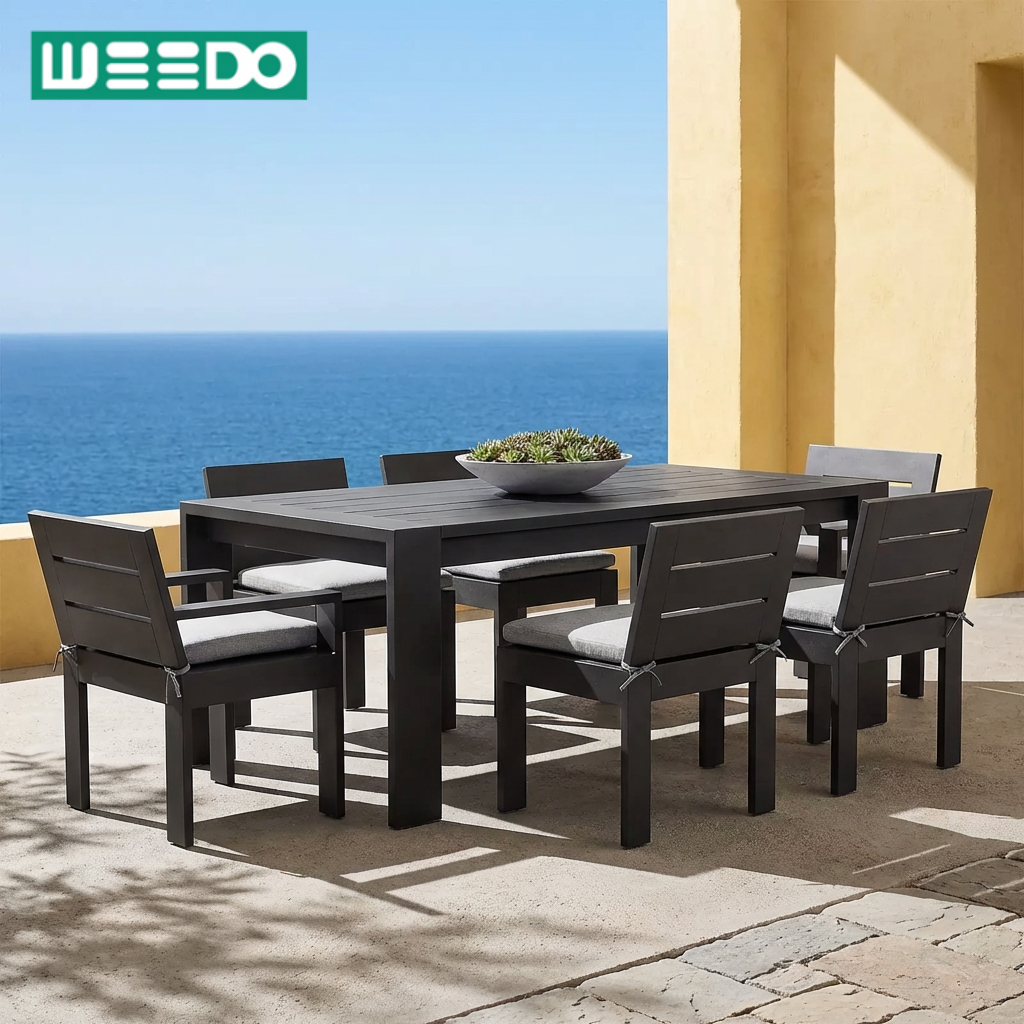
Strategic breakdown of the Pearl River Delta industrial cluster, comparative metallurgical engineering, and timber stabilization chemistry.
The global contract hospitality market has fundamentally shifted from transactional low-cost purchasing to long-term lifecycle yield optimization. Leading project procurement officers, hotel group asset directors, and high-end outdoor brands recognize that the true cost of an outdoor couch set is governed by its resistance to weathering, structural deformation, and moisture infiltration over an extended amortization period. Within China, the production epicenter is concentrated in Foshan, Guangdong Province—a specialized ecosystem where precision metal fabrication, high-oil hardwood kiln curing, and high-performance polymer weaving unite under strict ISO 9001 and BSCI frameworks.
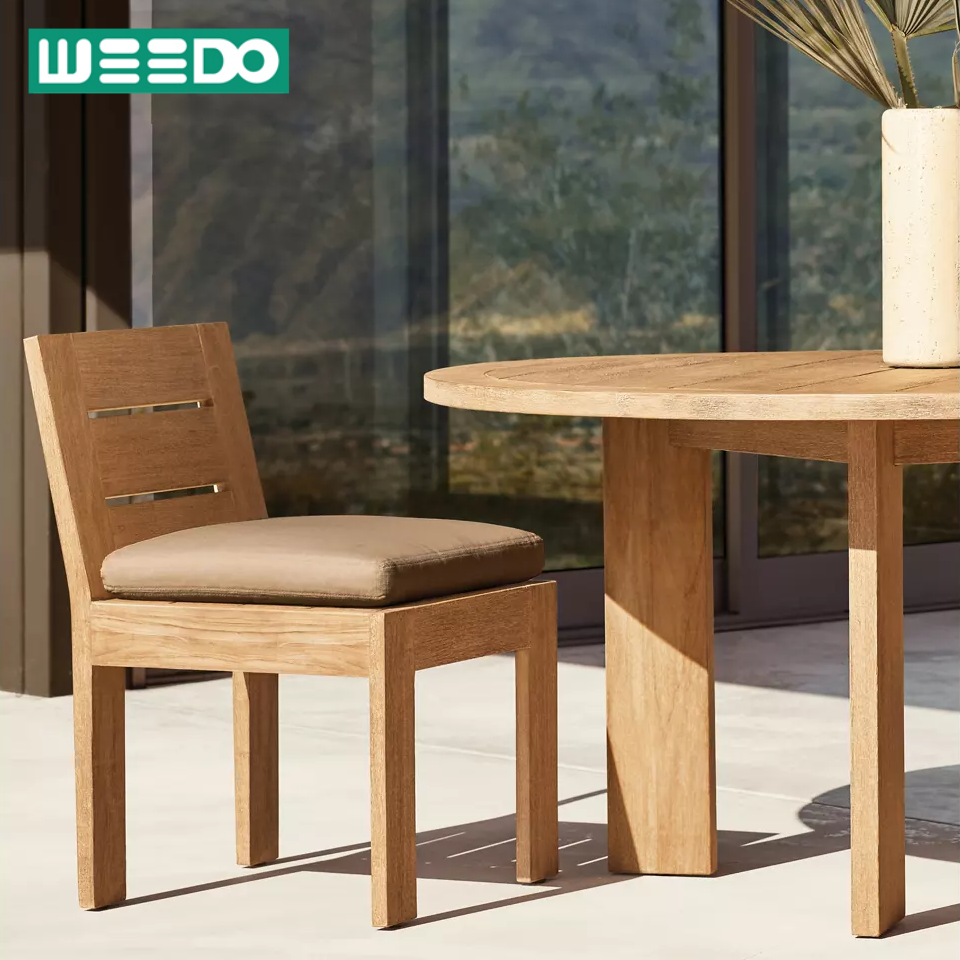
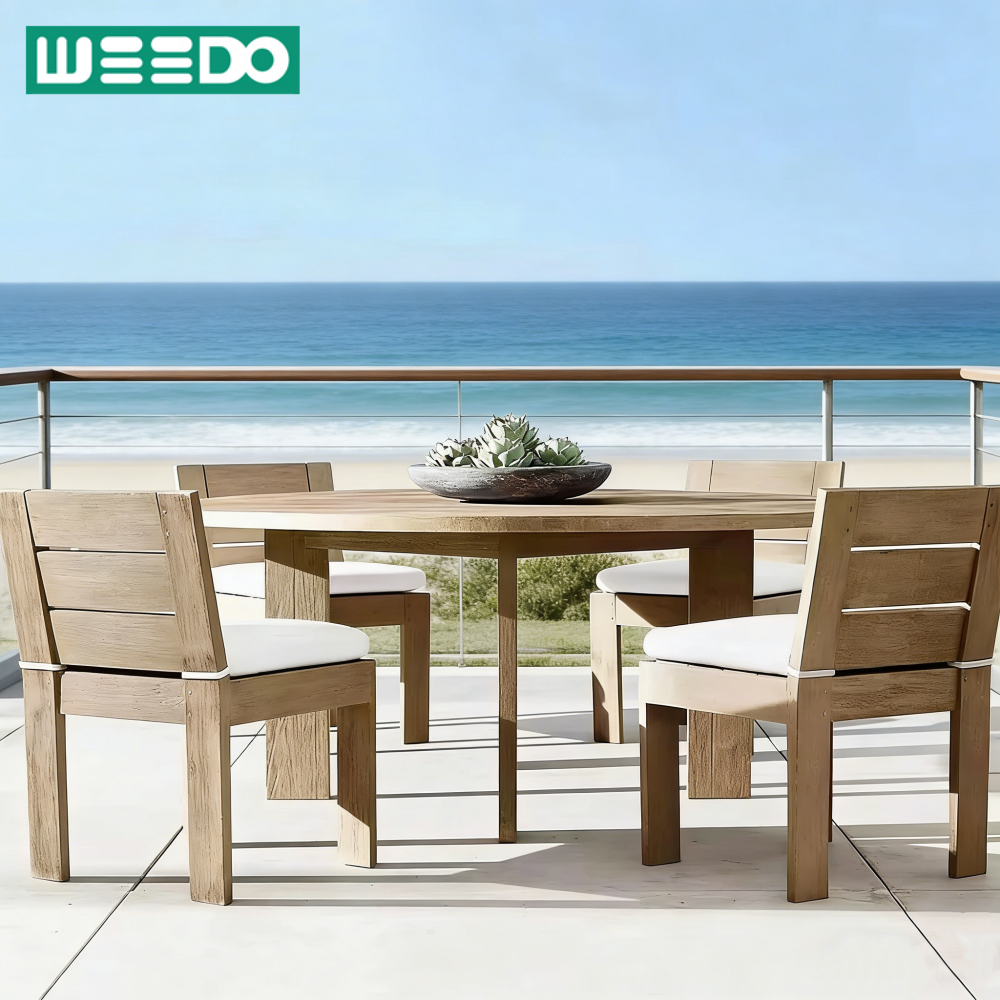
Unlike transient domestic assembly workshops, premier tier-one factories operate through vertically integrated processing protocols. For solid wood outdoor couch sets, the benchmark starts with genuine Tectona grandis (Grade-A Burmese/Indonesian Teak). The raw logs undergo computer-controlled vacuum-kiln drying for 21 to 28 days until moisture content stabilizes strictly between 10% and 12%. This narrow scientific band eliminates cell collapse and fiber rupture when exposed to hyper-arid or equatorial coastal environments. Precision CNC 5-axis mortise-and-tenon profiling replaces rudimentary steel screw butt-joints, ensuring that the structural frame flexes harmoniously with natural thermodynamic expansion and contraction without cracking.
In parallel, the high-tensile metal sectional sector requires architectural 6063-T5 aluminum alloy tubing with minimum wall profiles ranging from 1.8mm to 2.5mm at primary load-bearing nodes. Automated robotic TIG welding provides continuous, clean-purged joints that undergo multi-stage alkaline degreasing, zinc phosphate pre-treatment, and electrostatic powder curing utilizing Swiss Gema applicators and AkzoNobel Interpon powder formulas. The resultant film thickness (60 to 90 microns) demonstrates zero blistering or delamination through 1,500 hours of continuous neutral salt spray (ASTM B117) and Xenon arc light acceleration testing.
| Evaluation Parameter | Tier-1 China Factory Standard (CLENT Baseline) | Generic Commodity Workshops | Project Impact & Risk Mitigation |
|---|---|---|---|
| Timber Grade & Moisture | Kiln-dried Grade-A Teak (10–12% target MC; zero sapwood) | Air-dried mixed timber or sap-heavy teak (18–24% MC) | Zero Checking & Warping vs. Severe grain cracking in year 1 |
| Metal Substrate & Welds | 6063-T5 virgin alloy (≥2.0mm wall); robotic fully sealed TIG welds | Recycled thin-wall aluminum (<1.2mm); intermittent spot welds | 300kg Load Tolerance vs. Creep failure and joint shearing |
| Surface Protection | AkzoNobel architectural powder, 1500h ASTM B117 certified | Industrial unbranded lacquer, basic air-dry topcoats | UV800+ No-Chalking vs. Severe discoloration & peeling |
| Cushion Substrate | High-resilience reticulated QuickDry foam (pore open >90%) | Standard polyether sponge with waterproof outer cover only | Full Hydro-Drain in 15m vs. Internal water pooling and fungal rot |
| Fastener Metallurgy | AISI 304 / Marine-grade AISI 316 stainless with nylon washers | Galvanized carbon steel or zinc-plated pot metal screws | Zero Rust Bleed-Through vs. Structural rust streaks across patio slabs |
Actionable intelligence for brand principals, project estimators, and supply chain architects anticipating structural industry transformations over the next economic cycle.
With the enactment of the EU Deforestation Regulation (EUDR) and stringent supply-chain transparency laws in North America, contract buyers must verify timber origins through geolocation tracing. Tier-1 factories in Foshan are embedding digital chains of custody directly into purchase documentations, guaranteeing sustainable forest management certifications.
Volumetric ocean freight efficiency dictates contemporary factory R&D. Modern outdoor couch systems are engineered using hidden internal cam-lock joints and modular interlocking frames that drop cubic meterage (CBM) consumption by up to 55% per 40ft HQ container without visible external bolt flanges or structural wobble.
Commercial designers are departing from monolithic single-material collections. Specifiers prefer composite frames incorporating low-maintenance powder-coated aluminum substructures, Grade-A teak contact armrests for tactile warmth, and non-porous sintered stone tops that repel wine, oil, and atmospheric staining.
Emerging engineering breakthroughs reshaping longevity, seating comfort, and architectural outdoor styling.
Pigments introduced at the liquid polymer stage ensure UV colorfastness up to ISO 105-B02 Grade 7-8. Combined with fluorocarbon-free water-repellent nanocoatings, contemporary couch upholstery sheds torrential moisture while preserving vapor-breathable seating comfort under direct sub-tropical sun.
Traditional polypropylene ropes suffer from tensile creep and photochemical brittleness under intense solar exposure. Factories are moving toward high-density hollow-core TPE and multi-strand core-spun synthetic cords that maintain uniform tension and elastic recovery across temperature regimes from -25°C to +75°C.
Rather than relying solely on external impermeable slipcovers, leading outdoor couch sets incorporate dry-through architecture. Frames integrate perforated drainage gutters and mesh suspension bottom layers that route water immediately through open-cell reticulated foams, allowing seating to dry completely in minutes.
Why international contract purchasers, four-season hotel developers, and elite garden furniture distributors anchor their manufacturing operations with our Foshan workshops.
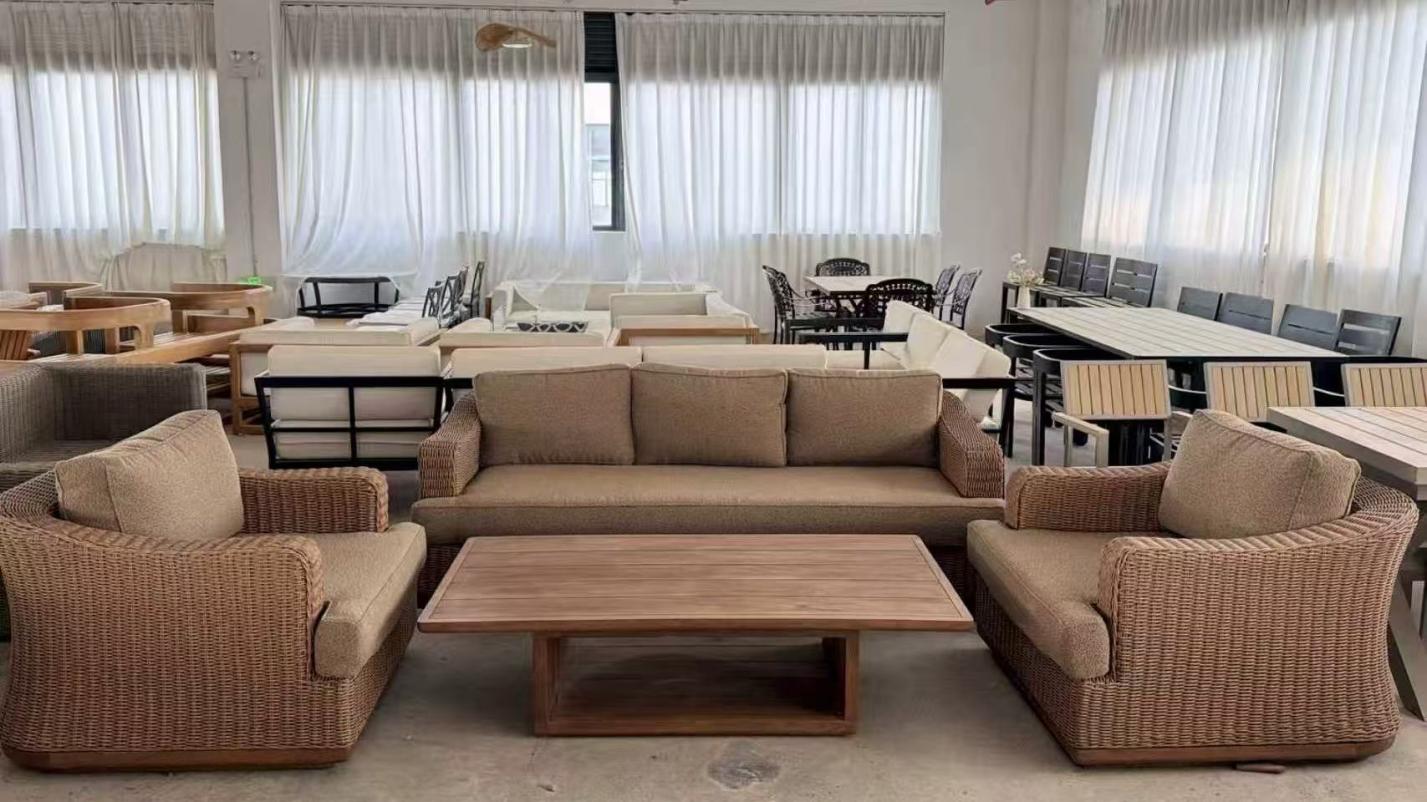
Our factory operates proprietary dehumidification and thermal-vacuum kilns that bring high-grade teak to an exact 10%–12% equilibrium moisture content. Multi-axis CNC milling centers reproduce CAD profiles to within 0.2mm tolerances, ensuring flawless modular interchangeability for large-scale hospitality rollouts.
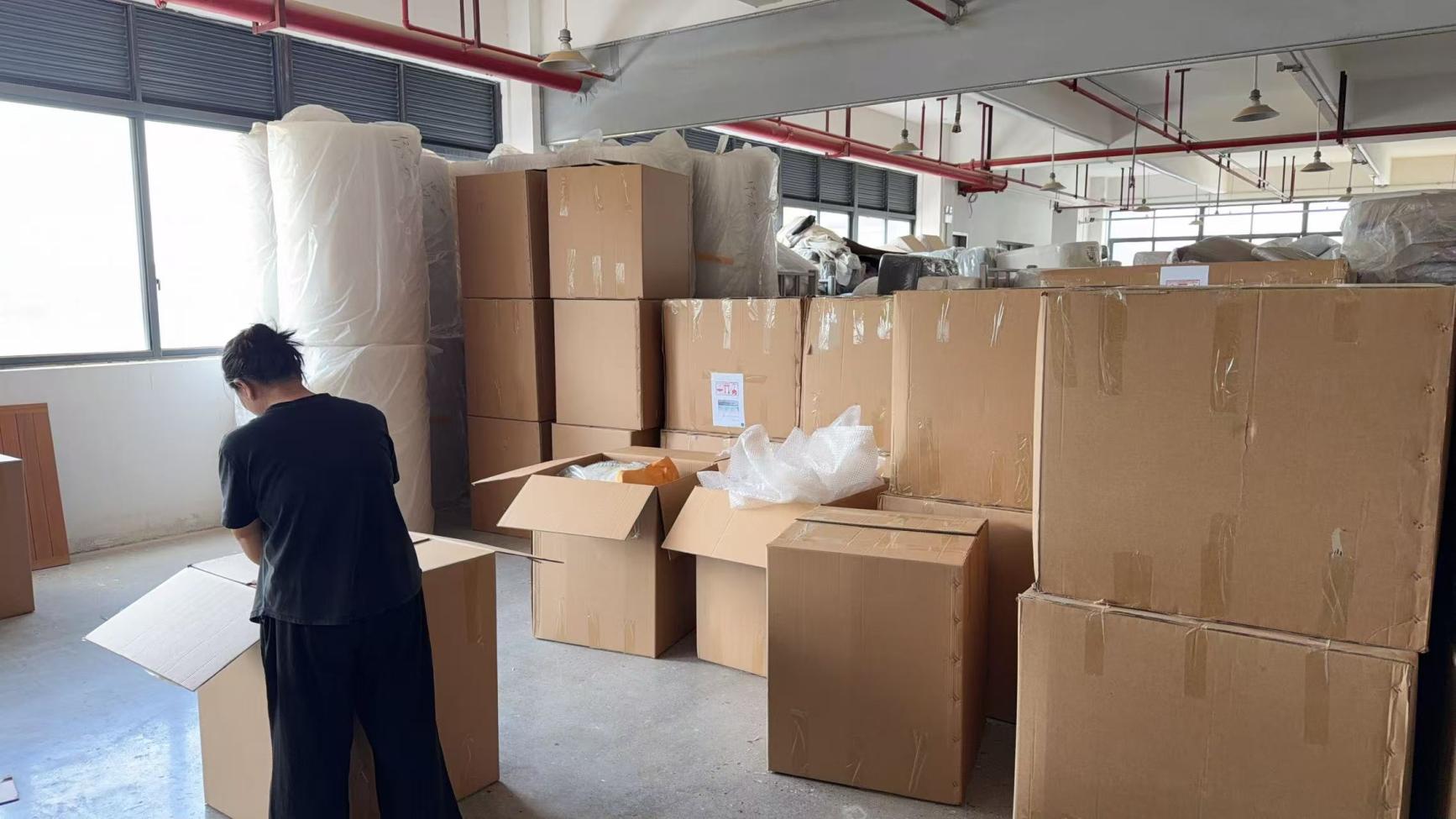
Every batch undergoes rigorous inbound spectral alloy testing, weld seam ultrasonic stress evaluation, cross-hatch powder adhesion tests, and water drainage verification. We supply verifiable photographic audit dossiers and full material laboratory certificates prior to balance settlement.
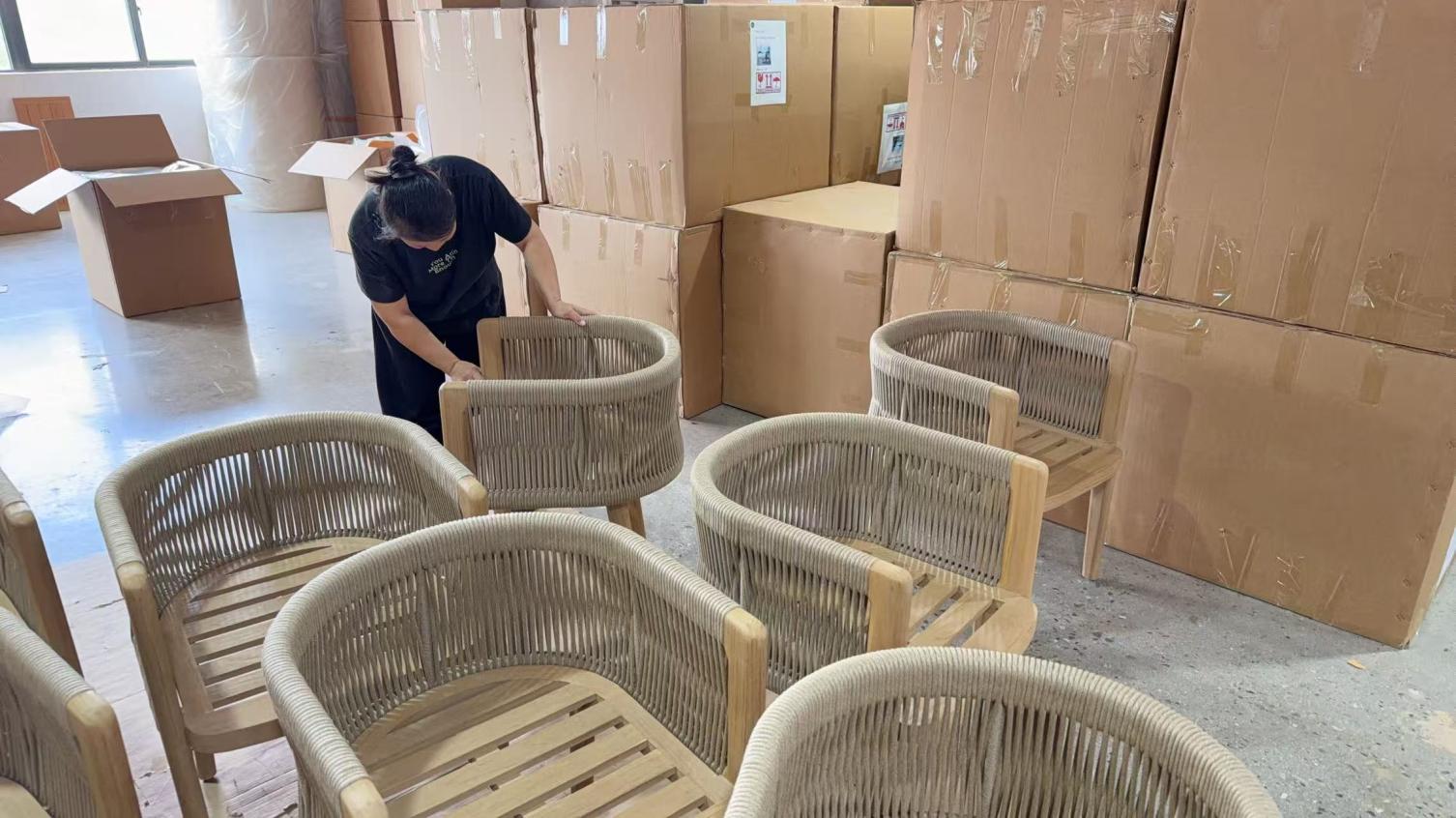
To conquer multi-week trans-oceanic container voyages across humid equatorial routes, all furniture pieces are encapsulated in micro-perforated vapor-barrier wraps, reinforced with double-wall honeycomb edge protectors, and secured within 250lb burst-test export cartons optimized for zero container void loss.
Exhaustive operational answers addressing material durability, contract customization, and ocean container optimization.