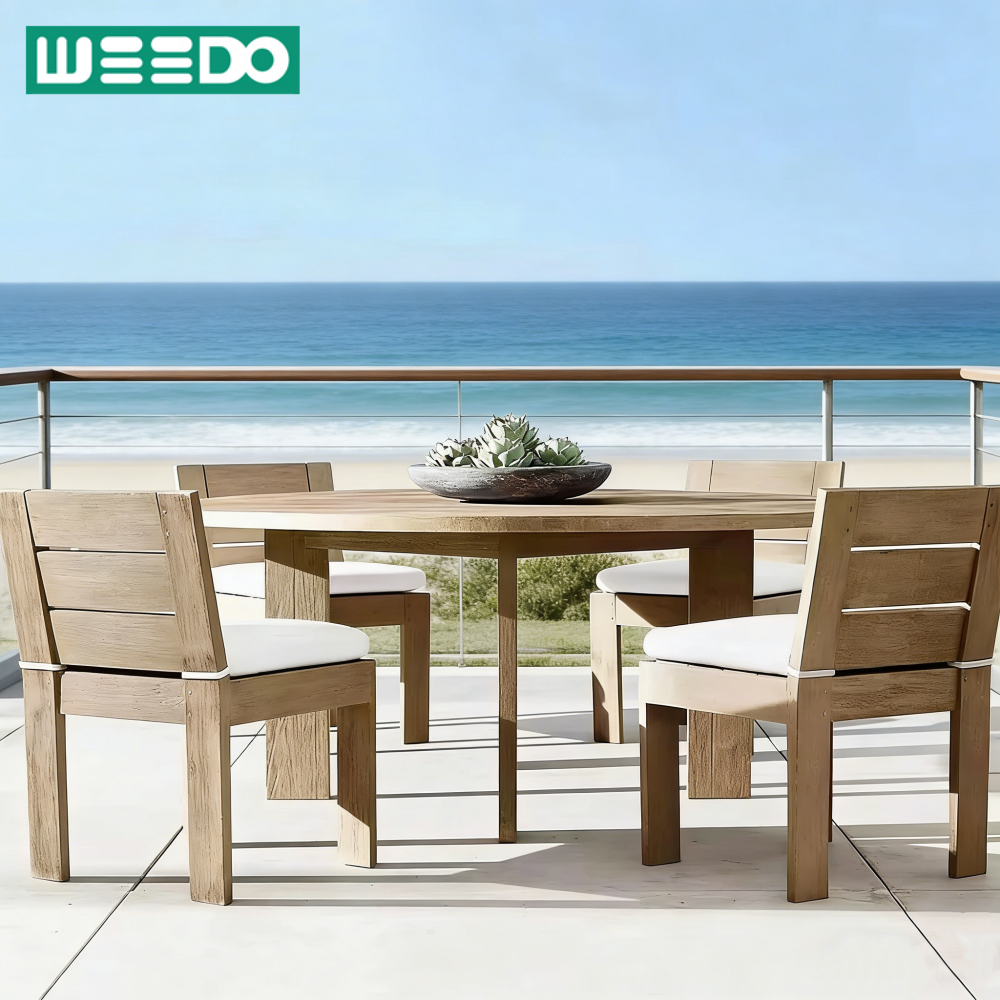
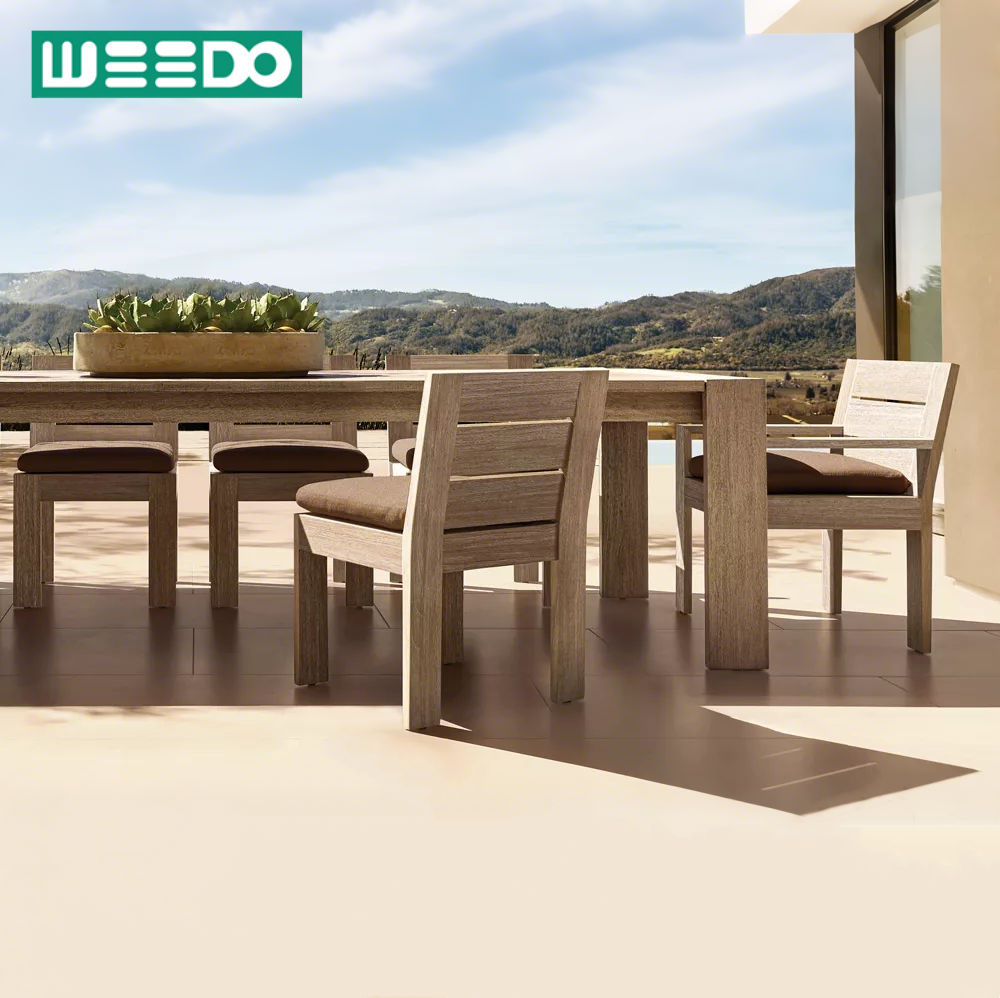
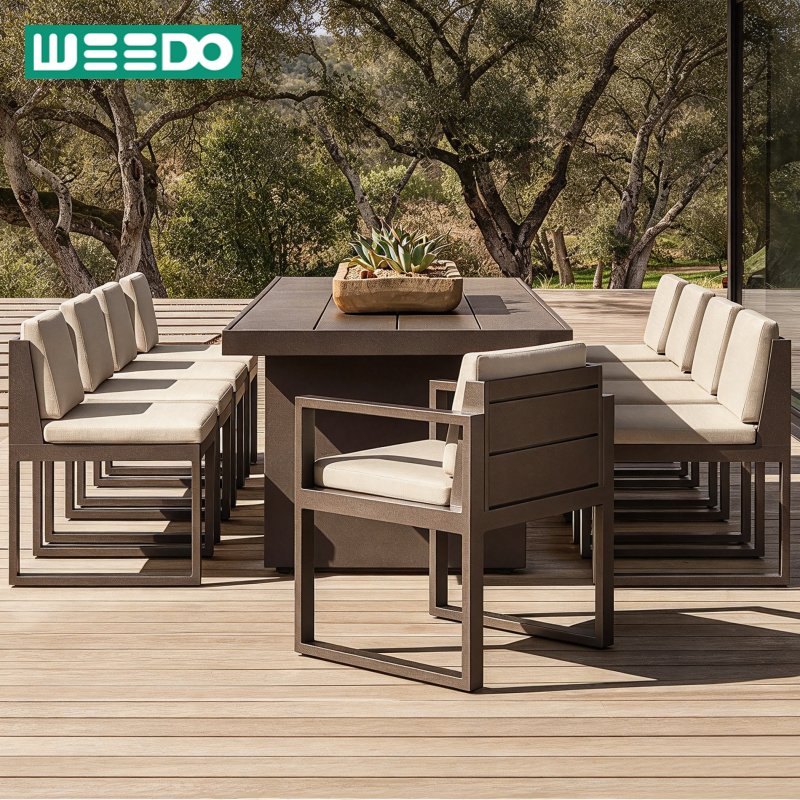
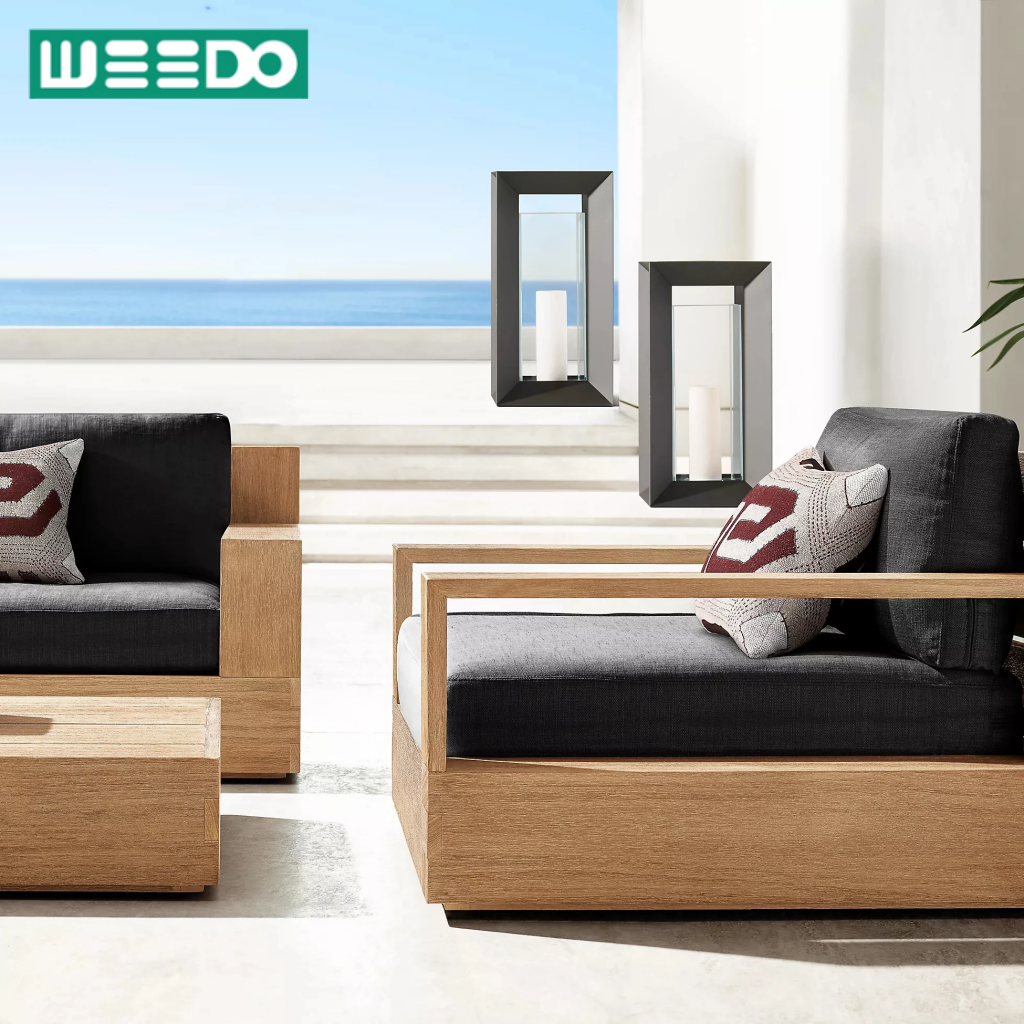
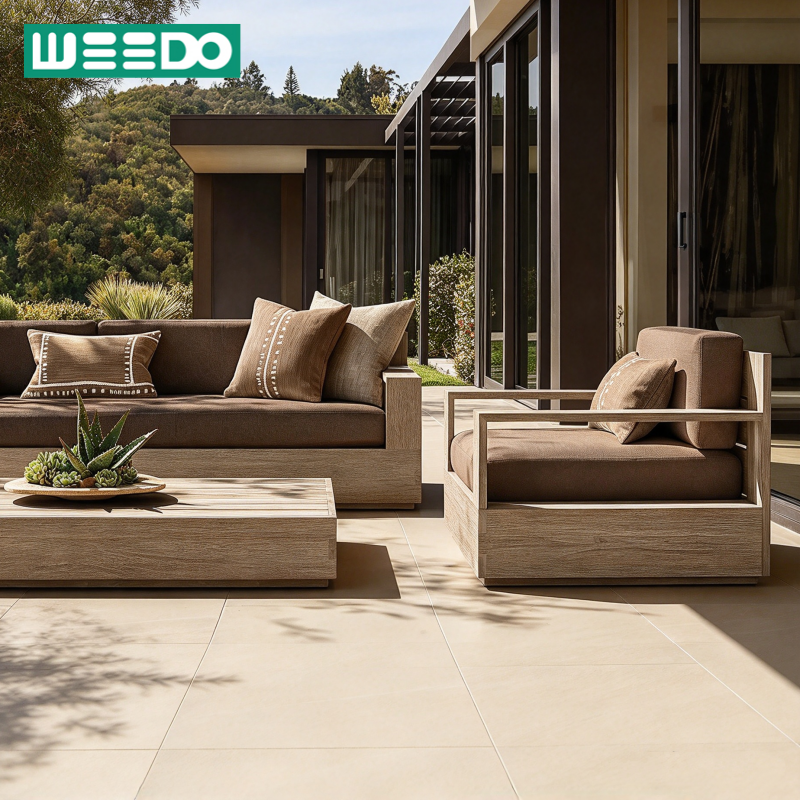
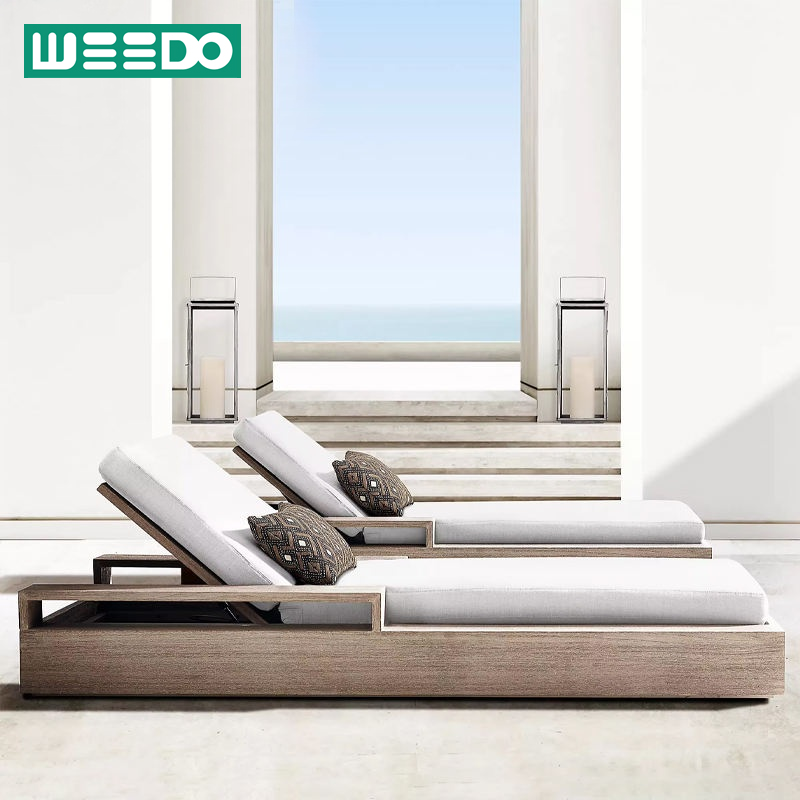
Manufactured direct from our Foshan facility, these 8 flagship contract-grade models showcase our metallurgical capability, robotic TIG welding, and seamless combination of aluminum, teak, and UV-resistant rope weaving.
Commercial outdoor furniture procurement requires precise balance between strength-to-weight ratio, atmospheric corrosion resistance, and total lifecycle maintenance cost. Here is how modern aluminum alloy benchmarks against traditional exterior substrates.
| Material Category | Tensile Strength & Wall Spec | Corrosion & UV Rating | Hospitality Maintenance Index | Ideal Project Deployment |
|---|---|---|---|---|
| Extruded 6063-T6 Aluminum | Yield: 214 MPa | Gauge: 1.8mm–2.5mm | Exceptional (Zero oxidation with nanoceramic primer) | Lowest Lifecycle Cost (Wipe clean, zero rust stain) | Coastal resorts, high-turnover hotel pools, rooftop dining terraces |
| Kiln-Dried Grade-A Teak | High structural flexural load rating | Natural silica & tectoquinone oil protection | Moderate (Seasonal oiling or natural silver patina weathering) | Luxury oceanfront villas, signature architectural dining zones |
| 304 / 316 Stainless Steel | Extremely high tensile capacity | High; requires electropolishing in marine air | Medium-High (Susceptible to tea-staining without passivation) | Heavy urban public spaces, sheltered high-wind plazas |
| Woven Olefin / Synthetic Cane | High tear resistance (PE/Olefin core) | UV resistance Grade 4–5 (EN ISO 105-B02) | Low (High-pressure hose rinse, mold-inhibiting weave) | Daybeds, deep-seating armchairs, boutique hotel cabanas |
Operating in the heart of Foshan, Guangdong—the world’s premier furniture manufacturing epicenter—we control every single phase of production from raw ingot extrusion and CNC profile bending to clean-room electrostatic powder coating and custom container stuffing.
Unlike budget factories that rely on spot tacking, our frames utilize 360-degree circumferential continuous TIG welds ground flush for invisible joints. Internal stress-relief venting eliminates moisture entrapment and internal corrosion during severe thermal cycling.
Get CatalogAluminum profiles undergo an automated 9-stage pre-treatment, including alkaline degreasing, acid etching, and chrome-free zirconium conversion coating. Finished with AkzoNobel Interpon architectural thermoset powder for guaranteed gloss retention in high-UV regions.
Get CatalogOur R&D engineering team designs modular knock-down (KD) subassemblies with interlocking CNC-machined stainless fasteners. This maximizes 40ft High Cube container volumetric utilization by up to 45%, significantly slashing ocean freight costs per unit.
Get CatalogProcurement directors and commercial landscape architects are adapting to stricter corporate ESG criteria, biophilic design trends, and extreme climate fluctuations. Here are the core factors steering international purchasing strategies over the next five years.
Global hospitality brands are mandating documented Scope 3 emissions reductions. Suppliers utilizing secondary recycled aluminum billets (certified >75% recycled content) cut embodied energy by 95% compared to primary smelter extraction, meeting corporate LEED v4.1 benchmarks without compromising tensile yield strength.
Single-material outdoor furniture is giving way to tactile hybrid engineering. Modern architectural specifications combine cold-formed structural aluminum chassis with warm, tactile contact points—such as FSC-certified Grade-A Indonesian teak armrests, sintered stone tabletops, and high-tenacity Italian braided rope.
Traditional reticulated foam has evolved into multi-density open-cell hydrophobic cores paired with breathable vinyl mesh undersides. This allows cushions to drain completely within 20 minutes following tropical downpours, eliminating hotel staff labor for cushion storage and accelerating poolside seat turnover.
How state-of-the-art aluminum outdoor furniture factories are decoupling production throughput from manual error via automated workflows.
Complex organic curves and interlocking extrusion angles are routed with precision 5-axis CNC machining centers. Tolerances within ±0.2mm guarantee that knocked-down container shipments assemble flawlessly on project sites without field re-drilling.
For extreme beachfront installations subject to intense saltwater aerosol and sand abrasion, we provide Polyvinylidene Fluoride (PVDF) fluoropolymer liquid coatings that exceed AAMA 2605 requirements, delivering 10-year gloss and chalk retention.
Digital BIM/CAD modeling allows our engineering studio to create bespoke extrusion dies and physical pre-production samples within 14 working days, shortening project lead cycles for architects and luxury hotel brand standards teams.
Direct answers from our structural engineers and export directors regarding certifications, warranties, material grades, and logistical execution.
For commercial contract projects (hotels, resorts, restaurants), residential-grade 1.0mm–1.2mm wall tubing is inadequate. Professional specifications require minimum 1.8mm to 2.2mm wall thickness 6063-T6 or 6061-T6 aluminum extrusion. This guarantees the structural integrity needed to withstand high dynamic loads (exceeding EN 581-1/2/3 commercial standards) without localized buckling or joint fatigue over continuous use.
Aluminum inherently forms a protective passive oxide film, meaning it will never rust like carbon steel. However, in beachfront settings within 500 meters of the ocean, salt spray can induce filiform corrosion if the pre-treatment is deficient. We use an automated zirconium conversion passivation pre-treatment and electrostatic application of AkzoNobel or Tiger Drylac architectural powder coats (minimum 70–90 micron dry film thickness), passing 1,500 hours of ASTM B117 neutral salt spray testing without blistering.
We source certified Grade-A teak timber containing high natural resins and essential oils. The wood is processed in automated vacuum-kiln drying chambers over 21 days until the equilibrium moisture content (EMC) is precisely stabilized between 10% and 12%. This critical parameter prevents shrinkage, warping, or radial checking when goods are shipped from humid subtropical production zones to arid or continental climates like the Middle East, North America, or Northern Europe.
For standard catalog collections, our MOQ starts at 5 to 10 sets per SKU, with full container loads (FCL) mixed across up to 3 to 4 complementary designs. For fully customized OEM projects requiring dedicated extrusion dies or tailored wood profiles, standard 3D CAD drawings are submitted within 72 hours, tooling and physical samples are produced in 14–20 days, and full container mass manufacturing is delivered in 35–45 days.
We implement a strict 4-stage Quality Inspection regime: 1) Raw Material Ingot/Timber Moisture Verification; 2) Structural In-Process Tolerance & Continuous TIG Weld Inspection; 3) Coating Adhesion Cross-Hatch (ASTM D3359) and Color Spectrum Uniformity Testing; 4) Pre-Packing 100% Mockup Assembly Verification. High-resolution photographic and video QC dossiers are delivered to the client for final release before balance disbursement.
Yes. We support architectural design firms, general contractors, and landscape specifiers with complete digital assets, including Revit/BIM families, SketchUp files, 3ds Max models with PBR texture maps, full material finish boards, and certified third-party physical lab testing reports (fire retardancy, UV exposure, and EN 581 structural load ratings).
Connect directly with our Foshan engineering and estimation team. Request complete product CAD specifications, material swatch kits, and factory-direct volume pricing for your upcoming hospitality or wholesale inventory programs.